The next Jab for Fats
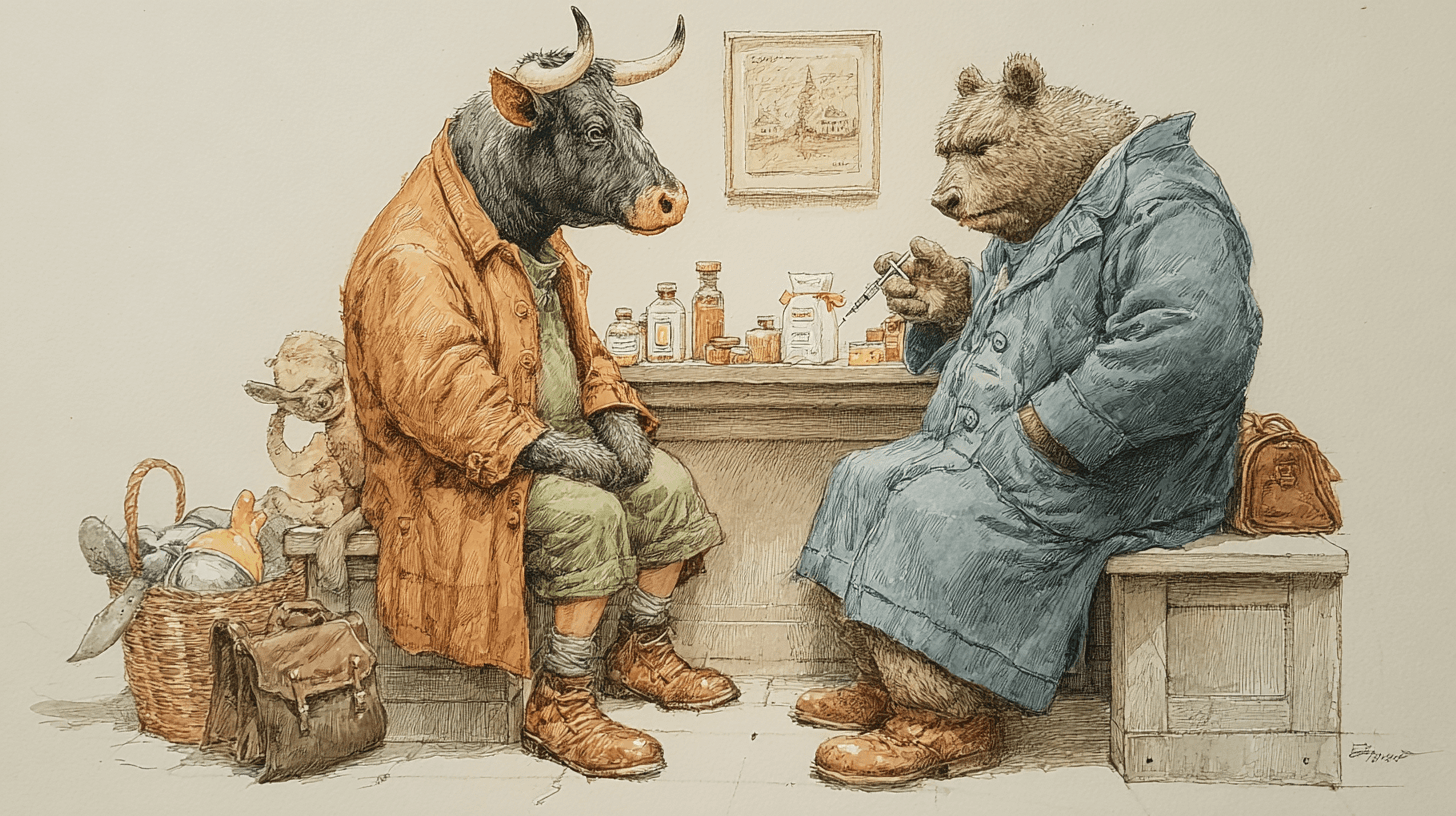
November is shaping up to be one of the weakest we’ve seen since our dairy careers began more than a decade ago. Butter has shed €700–€800/mt in just three weeks, and the final days of the month offer little hope of stability. With cream demand unusually weak and supply exceptionally high for the season, there’s still no clear floor for how far the fat market can fall. Cheese prices have held up relatively well so far, but cracks are beginning to show under the weight of collapsing butter and cream markets. On the powder side, whey products remain comparatively firm, though both skimmed and whole milk powder have slipped back into a downward trend. And while this time of year usually brings some lights in the darkness, it feels more like darker clouds are forming.
Although we see the current collapse in fat prices as primarily supply-driven, we’re increasingly hearing signals that demand is cooling as well. That’s no surprise — elevated prices rarely stimulate consumption. But more partners are highlighting something deeper, a trend that also helps explain the extreme opposite movement in dairy: the continued strength in WPC prices. For decades, Western consumers have steadily increased their fat intake. Yet early data now suggests U.S. dairy demand — particularly dairy fat demand — is slowing or even declining. So what is pushing Western consumers away from fats and toward high-value proteins?
GLP-1: The Silent Diet Revolution Shaping Dairy Demand
Ozempic, Mounjaro, Wegovy, Rybelsus — the list keeps growing. What started as a diabetes treatment has become one of the most influential consumer-behaviour shifts in decades. Celebrities like Opah, Megan Trainor, Amy Schumer, Elon Musk and Whoopi Goldberg have lost tens of pounds using this medicine. These GLP-1–based drugs were designed to help regulate blood sugar, but the miracle side effect is now well known: users dramatically reduce cravings for high-fat, high-sugar foods and show an increased preference for high-protein, “cleaner” diets.
Recent U.S. studies indicate that over 12% of consumers have used or are currently using GLP-1 drugs, with another 14% considering it — not primarily for diabetes, but to silence that inner voice pushing them toward fast food. We were unable to find reliable and recent EU-wide data, but anecdotal evidence paints a similar picture. A quick poll among friends revealed four people in our direct social circle who have used Ozempic or Mounjaro to manage their weight — all reporting significant health improvements and complete dietary shifts. Hardly a scientific sample, but it aligns eerily well with U.S. trends.
Even in the U.S. political arena, GLP-1 has moved centre stage. The Trump administration — not exactly known for its health policy accolades — is now pushing to make GLP-1 drugs more affordable. Prices could drop from roughly $1,000/month to $350/month, opening access to a far broader portion of the population.
A wholesale dietary revolution won’t happen overnight. But the first signals are arguably already showing up in dairy demand. What else explains strong, persistent demand for high-value whey proteins while butter and cheese consumption softens? If price were the only driver, whey concentrates should also be suffering — yet demand keeps outpacing supply, even at elevated price levels.
And yes, we’ve seen some creative product launches riding the protein wave — the high-protein Mars bar and high-proteinnCola remain our personal favourites in the “Why does this exist?” category.
Patent protection will likely keep GLP-1 prices high in the U.S. and EU for the foreseeable future. But in China, major patents expire in March 2026, opening the door for lower-cost alternatives. Asia’s competitive pharma environment could rapidly push prices down, making GLP-1 drugs far more widely accessible. If these medications succeed where decades of health campaigns failed — convincing consumers to simply eat less fat — the fat market may be in for another jab.
But for those who like to read markets through an optimistic lens: protein demand is poised to accelerate even further. Producers may need to rethink their product mix, and farmers could ultimately shift focus toward protein-rich components rather than fat.
As GLP-1 reshapes consumer habits and market psychology, the divide between protein strength and fat weakness becomes increasingly difficult to ignore. And with November already testing the lower bounds of the fat complex, it’s time to zoom in on the commodities themselves — starting with the product carrying the heaviest weight of this shift: butter.
Butter: A Market Without a Floor (Yet)
Last week we brokered over 3,000 mt of butter, and prices continued to slip day after day.
For Q1 NL/DE/BE, trading opened on Monday at €4,475/mt and closed late Friday at €4,350/mt.
Q1 also saw the first Polish butter trades return: starting at €4,350/mt on Monday and dropping to as low as €4,150/mt by Friday.
Further down the curve, Q2 NL/DE/BE began the week at €4,675/mt and finished at €4,475/mt.
The pressure is coming from two sides:
-
exceptionally cheap Christmas cream (we saw lows of €3,900)
-
a Q1 demand book that is already largely covered, just as producers begin pushing forward sales
With volatility this high, it’s increasingly difficult to argue what “fair value” for butter should be. The market is trading on momentum rather than fundamentals, and any attempt at valuation feels questionable. But if we step back and look at historical patterns, the current stock expectations would traditionally imply a butter price somewhere close to €4,000/mt. If that’s the benchmark, the market is—ironically—almost exactly on target.
Over the past decade, EU butter stocks have risen above 115,000 mt in December on four occasions. Below, you’ll find the corresponding EU quotations for those years. We added December 2022 as well, because although stock building started later that year, it still triggered downward pressure: January 2023 butter dropped below €5,000/mt and continued sliding toward €4,500/mt.
| Decemer of Year | Stocks in 1000mt | Ave. Quotation | |
| 2015 | 146 | € 2900 | |
| 2019 | 135 | € 3600 | |
| 2020 | 140 | € 3300 | |
| 2022 | 115 | € 5568 | |
| 2025 | 132 | € 4500 | *forecasted |
The key question now is how quickly stocks will continue to climb next year. Based on our current forecast, we expect milk intake to increase further over the relatively weak H1 2025, giving H1 2026 a significantly stronger production base. Commodity output is therefore likely to outpace 2025 levels, adding natural upward pressure to stocks.
Exports in H1 2025 have been steady, but nothing exceptional — and we expect similar at best next year. On top of that, EU imports are forecasted to remain similar or even higher than 2025, adding yet another layer of supply into the system. Put together, every major indicator points toward continued stock growth throughout 2026.
With that in mind, we fully agree with the available market forecasts suggesting that the EU may build the highest butter stocks in the last 20 years. And when we line up those historic peak stock years with their corresponding EU quotations, the conclusion is hard to ignore: the relationship continues to support a bearish outlook for butter.
| July of Year | Stocks in 1000mt | Ave Quotation |
| 2012 | 290 | € 2.700,00 |
| 2016 | 294 | € 3.200,00 |
| 2019 | 319 | € 3.700,00 |
| 2021 | 311 | € 3.900,00 |
| 2023 | 289 | € 4.600,00 |
| 2026 | 325 | ??? |
After feeding our AI partners the historical butter stock–quotation ratios, and adjusting for the inflationary distortions of the past year, the resulting outlook is remarkably consistent with our own expectations. Their model projects a €3,900–€4,200/mt price range for July 2026 — a level that aligns closely with the long-term correlations we observe and one we largely agree with.
Cheese: Slow to React, But Not Immune
The cheese market continues to show resistance against a sharper correction, even though lower trades are already happening. The decline is far less aggressive than what we are witnessing in the butter market, but sentiment among traders and end users is becoming increasingly aligned: with heavy pressure on cream and butter, it is difficult to argue that cheese prices should remain insulated for much longer.
Last week’s GDT results merely confirmed what most in the market already expected — worldwide cheese sentiment is softening. As we move into the final week of November and approach the first weeks of December, the pressure to start selling Q1 volumes increases. That period is traditionally quiet and seasonally slow for cheese demand, and this year we see little indication that Q1 will deviate from that pattern. In fact, the combination of weak fat markets and the usual post-holiday lull suggests the early weeks of 2026 could become active and noticeably bearish for cheese sellers.
Part of the slower reaction in cheese is structural. Cheese markets historically trail butter in both upturns and downturns — something clearly visible in the U.S. as well. There, cheese prices are currently trading 20–25% below their peak earlier this year, while butter has already dropped more than 40% from its highs. The EU is showing a remarkably similar dynamic: butter has fallen from roughly €7,500 to €4,500, a 40% decline, while cheese prices have only slipped around 30% from their peaks.
Given the strength and speed of the correction in fats, we would expect cheese to gradually align with these ratios. A move toward a 40% correction would imply an additional €250–€400/mt of downside from today’s levels — entirely plausible if fat markets remain under pressure and buyers stay defensive.
There is always the possibility that export demand provides a measure of support. Some destinations may step in at lower price levels. But realistically, we doubt that Q1 exports alone will be strong enough to keep European cheese prices anchored in their current range. Seasonal demand patterns simply do not favour a firm Q1, and the broader dairy complex is offering little encouragement.
In short: cheese may be slow to move, but it is unlikely to remain the exception in a market where nearly everything else is trending lower.
Powders: Softening Further, With WMP Leading the Weakness
The powder complex continues to soften, broadly aligning with the sentiment coming out of recent GDT auctions. Both SMP and WMP have been under pressure, but the market tone has shifted more noticeably in whole milk powder, which feels materially weaker than SMP at the moment. The fundamentals explain why: stocks are still growing, demand is still easing, and there is little in the way of bullish news to counterbalance these trends.
SMP remains somewhat more resilient, supported by steadier industrial demand and slightly more disciplined production. But even here the tone has softened in the past two weeks. Buyers are becoming more cautious, waiting for clearer signals or lower levels before stepping in, while sellers appear increasingly willing to test the downside as inventories build. The overall direction may be slower and less dramatic than in fats, but the underlying message is similar: the market is drifting lower, not stabilising.
WMP, by contrast, is struggling with a more challenging combination of rising stocks and visibly weaker demand. Several export-oriented producers have hinted at slower off-take in Q4, and the demand signals from Asia are mixed at best. Even with some export activity helping to clear volumes, it does not seem enough to meaningfully tighten the market. The overhang remains, and until either demand accelerates or production adjusts, WMP will likely continue to pull the powder complex downward.
Exports are providing a degree of relief — enough to prevent a steeper correction, but not enough to reverse the trend. The clearing of some offshore demand has made certain sellers feel more comfortable, yet the overall balance remains heavy. The truth is that powder markets rely heavily on a delicate export–import equilibrium, and right now that balance still leans toward softening prices.
The powder market shows a consistent picture. It is not collapsing, but it is gradually easing, and WMP is setting the tone. Unless demand meaningfully improves or milk flows turn sharply lower, we see limited support for a steady Q1. The sentiment, the fundamentals, and the global indicators all point in the same direction — lower, not higher.
Final Note: A Market Searching for Its Bearings
Across the dairy complex, the message is remarkably consistent: the market is shifting, and the shift is not subtle. Butter has been leading the correction with an almost relentless pace, driven by weak cream demand, high stocks, and forward sales colliding with an already covered Q1 book. Cheese is following more slowly — as it always does — but even there, the weight of collapsing fat values and a seasonally quiet Q1 is pulling sentiment steadily lower. Powders, meanwhile, are softening in line with global benchmarks, with WMP taking the brunt of the pressure as stocks grow and demand struggles to keep up.
Taken together, these segments tell a story of a market that is moving into 2026 with heavier supply, softer demand, and little fundamental justification for higher prices. The structural undercurrents — from milk intake recovery to potential shifts in consumer diets — are adding complexity, but not yet offering meaningful support.
We are entering a period where clarity will not come from day-to-day volatility, but from understanding the broader trajectory: elevated stocks, normalising inflation, and a demand side that is no longer able to absorb surplus at previous price levels.
In that context, the outlook becomes clearer:
The dairy market does not need a shock to move lower — it simply needs time.
And unless fundamentals change meaningfully, time is something this market has plenty of.
More from the desk
Our Long View Before Our Long Break 
Our Long View Before Our Long Break
Last week the market found a bit of stability. After lower trades on cheese, the cheese market traded slowly up, although a real rally remains absent. Butter prices did dip a bit further, although at the start of this week we see some strength on the back end of the curve. And on powder, our bullish feeling just doesn't go away — and now we can find some confirmation in the market as well.
Dairy Carry Has a Shelf Life 
Dairy Carry Has a Shelf Life
Last week was bearish across the board — every product we broker leaned the wrong way. Powders lost more momentum, cheese slipped well below €3,000 for some products, and butter continues to impress with just how much keeps showing up. Supply, supply, supply.
Summer Shopping or Summer Sale? 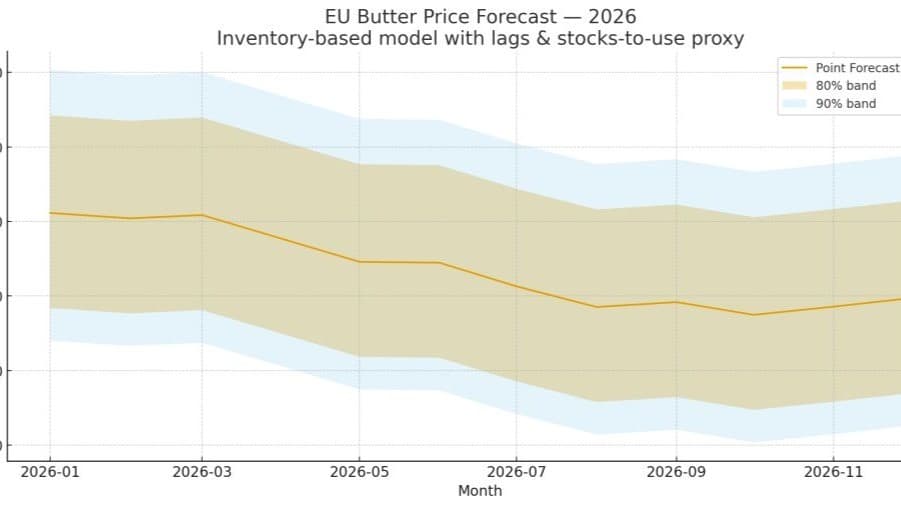
Summer Shopping or Summer Sale?
Last week was again a bit of a bearish week for the entire dairy industry. With cream prices under pressure and milk intake still strong, we keep seeing a market that has more supply than demand. Butter prices took another step lower, cheese prices cracked, and the powder market gave back a bit of its gains again.
The weekly report
Get it before it is anywhere else
Every market report, straight to your inbox the moment it is written. Butter, cheese, powder, liquids — pick what you actually trade.
Roughly weekly · Free · Unsubscribe any time