
Selling the Rally: Volume Found on the Offer Side

After a bullish GDT result, the expectation was simple: markets rally higher. And they did — briefly. Q2 butter traded up during the morning session, but as bullish markets tend to do, they attracted sellers. By end of day, most of that €100 gain had evaporated. It's a pattern as old as markets themselves — strength invites supply.
We hear demand is real. Buyers are active, and new deals have been closed at higher levels. But getting extra volume on the offer side has proven considerably easier than on the buy side. The asymmetry is telling. Across the board, markets are losing a bit of momentum, and what started the week looking like a continuation is starting to feel more like distribution.
The question now is whether this is a healthy consolidation after a sharp run-up, or the first signs of a broader reversal. We don't have a definitive answer yet — but we're watching the same signals everyone else is, and a few of them are worth discussing.
🥛 Spot Markets
Raw milk continues to struggle. Prices are slipping further below €0.15/kg across western EU, with no clear floor yet in sight. It's a reminder that the upstream picture doesn't always match the enthusiasm in processed markets — and at some point, that disconnect matters.
SMC follows the same trend. Sub-€500 is now common, and there's limited appetite to push back. When the co-products are soft, it takes a stronger hand on the butter side to keep the overall story together.
Cream is the outlier — and what an outlier. Easter demand, warmer weather and the broader bullish sentiment pushed cream prices as high as €5,400 intraday before cooling back to just below or at €5,000 by close. A significant move in a single session. The reversal from the highs is worth noting, but the underlying demand signal from cream is real — seasonal patterns are asserting themselves, and processors are feeling it.
🌍 Export Exposure – Worth Noting
A Rabobank analysis circulating today puts the geopolitical risk in sharp focus: over 20% of EU dairy exports are potentially affected by the Iran conflict and the associated disruption in the Middle East. The potential closure of the Strait of Hormuz directly blocks maritime access to Iraq, Kuwait, Bahrain, Qatar, UAE and parts of Saudi Arabia — markets that together imported €2.95 billion in dairy products in 2025. Saudi Arabia has a partial workaround via its western ports like Jeddah, but the other Gulf states don't have that luxury.
Add to that the threats around the Bab el-Mandeb Strait from Yemen-aligned groups, and the risk profile for EU dairy exports to Asia — worth €3.3 billion and representing 16.8% of total EU dairy exports — starts to look more fragile than the headline prices suggest. New Zealand is also exposed, with around €310 million (5.6% of total NZ dairy exports) routed through the same corridor toward the EU and UK.
None of this is new news geopolitically, but the dairy trade dimension is getting more attention, and rightly so. In a market already trying to find its footing, the last thing it needs is a supply chain shock on the demand side. Worth keeping an eye on.
🧈 Butter
CME is cooling. EEX futures followed. Tuesday evening we saw H2 trade at €5,500 — by today Q4 had slipped to €5,400, Q3 lower still, and Q2 is back below €5,000. That's a meaningful pullback from the recent highs, and it happened quickly.
The forward curve is softening, and that matters. When Q2 slips back below €5,000, it changes the conversation for anyone trying to price spot business against futures. The arbitrage tightens, the risk premium shrinks, and sellers start to look more attractive relative to buyers.
The big question remains: did we see the top? We're not calling it yet — and we'd caution against anyone who is. Tops are only obvious in hindsight. But the inflow of sellers and the quick exit of buyers is a signal worth respecting. At these levels, the market looks more like a sell than a buy to many participants. It's not unusual — after a run like this, people want to lock in profits on longs, or try to catch a high print before the window closes. That behaviour is entirely rational. Whether it marks the peak or just a healthy breather is what the next few sessions will tell us.
🧀 Cheese
Same pattern. Mozzarella and Gouda at €3,600 is bringing sellers out of the woodwork. The bids are holding around €3,400 — a €200 gap that isn't closing quickly. We're hearing producers offering below where traders are trying to sell on the spot market, which suggests the traded market may be running a little ahead of where the actual cheese is changing hands.
We wouldn't be surprised to see prices ease from here. The demand side hasn't disappeared, but it's becoming more selective at these levels. Buyers know there's volume available. That changes the negotiating dynamic.
As one producer put it honestly: "We don't see the export markets heading to where EU prices are pointing." It's a blunt observation, but an important one. If export demand can't justify current EU price levels, domestic and intra-EU business has to carry the weight — and that's a narrower foundation than it looks.
🥛 SMP
Hard to get a clean read on SMP. More sellers are visible, but offers remain on the high side — €2,625–€2,675 for Q2. The buy side is still aiming below €2,600. It's a standoff for now, and without a clear catalyst to close that gap, business will remain thin. The softer SMC spot prices are applying some pressure from below. We'll keep watching.
Bottom line: Higher prices attract sellers — that's not a bearish call, that's just how markets work. After a move as sharp as what we've seen over the past weeks, profit-taking on longs and opportunistic selling at the highs is entirely rational behaviour. Whether this marks the top, a consolidation, or just noise before the next leg up is still an open question.
What we can say is this: the easy money has likely been made on the long side for now. The next move will require more conviction — and more patience.
Let's trade 🧈
More from the desk
Our Long View Before Our Long Break 
Our Long View Before Our Long Break
Last week the market found a bit of stability. After lower trades on cheese, the cheese market traded slowly up, although a real rally remains absent. Butter prices did dip a bit further, although at the start of this week we see some strength on the back end of the curve. And on powder, our bullish feeling just doesn't go away — and now we can find some confirmation in the market as well.
Dairy Carry Has a Shelf Life 
Dairy Carry Has a Shelf Life
Last week was bearish across the board — every product we broker leaned the wrong way. Powders lost more momentum, cheese slipped well below €3,000 for some products, and butter continues to impress with just how much keeps showing up. Supply, supply, supply.
Summer Shopping or Summer Sale? 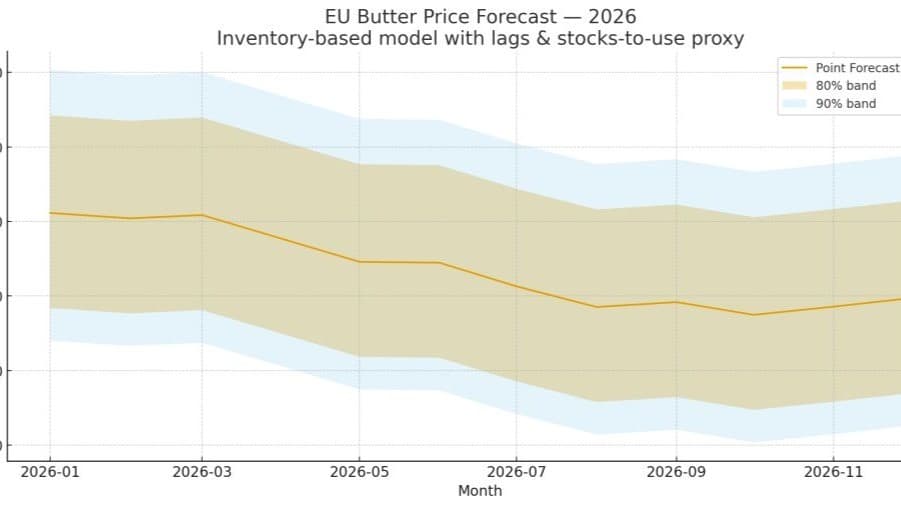
Summer Shopping or Summer Sale?
Last week was again a bit of a bearish week for the entire dairy industry. With cream prices under pressure and milk intake still strong, we keep seeing a market that has more supply than demand. Butter prices took another step lower, cheese prices cracked, and the powder market gave back a bit of its gains again.
The weekly report
Get it before it is anywhere else
Every market report, straight to your inbox the moment it is written. Butter, cheese, powder, liquids — pick what you actually trade.
Roughly weekly · Free · Unsubscribe any time