The Bull, The Bear & The Black Swan
Last week was an intense one. When conflict erupted in the Middle East, the market's first instinct was to buy. Partners moved quickly on available offers, and by Tuesday the GDT had rallied alongside a broad bullish swing across agricultural commodity markets world wide. For a moment, it felt like the market had made up its mind. The second half of the week told a different story. Higher transport and insurance costs began working their way through the chain. Blocked shipping routes started to slow supply flows rather than merely threaten them. The initial bullish conviction gave way to something more cautious — and by Friday, the dairy commodities we broker had given back everything gained on Monday and Tuesday.
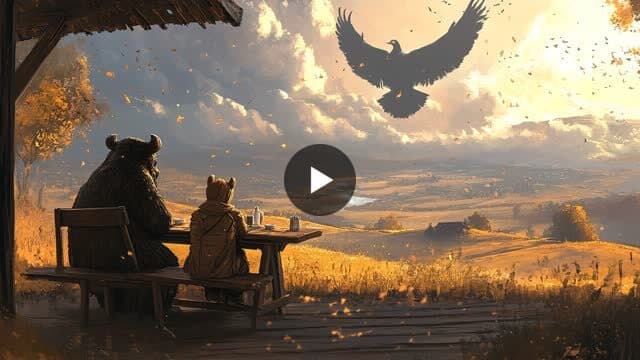
What comes next is genuinely difficult to call. Higher energy costs will add pressure across the chain, but it is hard to see consumption rising in an environment of geopolitical uncertainty. Production may face headwinds if farm input prices climb — but in the short term, we expect supply to remain largely unaffected. Our son Ollie, now seven, once again caught me scratching my head more than once last week. When he asked what was happening, we found ourselves reaching for the same tools we used in October — when prices were falling and the world needed explaining. For those who have forgotten, or never read it: our story about The Bull, the Bear and the Fairy Dust is still there, waiting.
For those who have no patience for stories today, feel free to skip today's update. But for the many who wrote to us after the last one — today's tale is for you.
The Bear, the Bull and the Black Swan.
Prologue: A Season of Balance
Peace had settled over Euphoria like morning mist over the River of Liquidity.
Since the great unraveling — the days of empty wagons and collapsed prices — the Bull and the Bear had found something neither had expected: a working arrangement. Not friendship exactly. More the kind of mutual respect that develops between two people who have watched each other be wrong enough times to stop keeping score.
The Bull continued to prepare for times when prices would rise again. The fairies were producing at a rate not seen before. The Bear warned the Bull it could be too much, but the Bull told him he would rather remain prepared for when Fairy Dust would be expensive again. The Wizard on the Hill of Balance had declared the market fairly valued, which in Euphoria meant something close to boring — and boring, after the chaos of recent seasons, felt like a gift to many.
And although the Bull was carrying more than enough inventory, the Bear had learned to stop hoping for prices to come further down. At fair market prices, he saw that the people in Euphoria were happy to commit to buying from the Bull. Even the Bear sometimes fearfully thought back to the times when Fairy Dust was impossible to come by. Equilibrium, fragile as it was, held.
Then one morning in early spring, something appeared on the horizon that nobody had planned for.
Chapter I: The Bird Nobody Expected
It arrived without warning, as such things always do.
The villagers of Marginmouth spotted it first — a vast shape descending from the direction of the Straits of Passage, the narrow waterway that connected the western farms of the Fairy Dust world to the great markets of the east. It was enormous. Black as midnight. Its wingspan threw shadows over entire market squares.
A Black Swan. Big, strong and impossible to look away from.
The Black Swan circled the Straits of Passage three times, then landed directly on the water, spreading its wings wide, and simply… stopped all those who wanted to pass.
No caravan could pass. No shipment could move. The great convoys of Fairy Dust from the western farms — hundreds of jars, weeks of supply — sat motionless on the wrong side of the straits, unable to reach their buyers.
A runner arrived breathless at Nate’s Diner on the edge of Euphoria, where the Bull and the Bear were halfway through their morning meal.
“The Straits,” the runner gasped. “They’re blocked. The Black Swan has come.”
The Bull set down his fork.
The Bear set down his coffee.
They looked at each other across the cracked vinyl booth, and for a moment, the diner was very quiet.
Chapter II: The Bull Sees Sunlight
The Bull was on his feet before the runner had finished speaking.
He understood immediately what a blocked strait meant. Supply uncertainty! And that while the farms were preparing for the feast of light, all the fresh Fairy Dust was used to fill the market squares with fresh produce. The jars sitting on the eastern side of the Straits of Passage were as good as invisible to the markets outside of Euphoria. They existed — but they could not be touched.
He was already doing the calculations in his head.
He had seen this before — not this Swan, nobody had seen this Swan before — but the shape of it. The hollow feeling in the supply chain. The moment when the number of jars of Fairy Dust, available today, suddenly felt smaller than the number of jars people needed tomorrow.
He called his men. He bought. Aggressively, with the particular enthusiasm of someone who has been quietly certain he was right for months and now has the world’s permission to prove it.
Some of the Bull’s customers got anxious and started to stock up on Fairy Dust as well. Some even more than they were in need of. But better to have something extra for when the dust is gone, they all seemed to think. By noon, the price of Fairy Dust had risen four shimmer-points.
By evening, it was up eighty.
The Bull walked through the market with his chest out and his horns gleaming, slapping backs, shaking hands, telling anyone who would listen: “I told you. I told you the fundamentals were tight.”
And for a few golden weeks, Euphoria agreed with him entirely.
Chapter III: The Bear Reads His Notes
The Bear had gone directly from the diner to his study — a small, cluttered room above the chandler’s shop, where the walls were lined with leather notebooks and the desk was buried under fifteen seasons of supply data.
He did not panic. He did not buy wildly.
He opened his notebook to a page he had written in January, when prices were soft and the Bull was complaining about weak demand. The page was titled, in his precise handwriting: “What happens when the market is structurally long?”
He read it slowly, made a few notes in the margin, and poured himself a second cup of tea.
The Straits were blocked, and buyers were buying whatever they could still get cheap. This was real. The short-term picture was unambiguously bullish — logistics interrupted, buyers nervous, prices rising. He didn’t dispute any of it.
But the Bear was not paid to trade the next two weeks. He was paid to understand what came after.
He pulled out a second notebook. In it was a careful accounting of the western farms — their output, their current inventory levels, the alternate routes their caravans would take around the Straits if the Swan remained. Longer routes. More expensive. But possible.
He turned to a third notebook. In it, the demand picture. The villages of Euphoria had spent the last three seasons buying cautiously, keeping their own stocks lean for some products. But now they had watched prices rise and rise and chosen to work with more safety stock than in the previous year. Their pantries were not empty, but they were fuller than the previous years. A short spike in prices would not, on its own, bring buyers flooding back.
He made one final note and closed the book.
The Swan creates a story. But the fairies are still producing. The western farms are still full. The pantries of Euphoria are filled to the tops. The disruption is real and might just be temporary. The supply is real and structural. When the story ends, the fundamentals remain.
He put on his coat and walked back to the market.
Chapter IV: The Wizard Speaks
The Wizard had been watching from his tower.
He had seen Black Swans before — not this exact bird, but one of its ancestors. He knew their nature. They were creatures of the dramatic moment, drawn to the precise instant when the world had convinced itself it understood everything, and then proceeding to demonstrate otherwise.
He descended the Hill of Balance for the first time in months, walking slowly into the market square where the vendors were shouting new prices and buyers were clutching their coin purses in something between excitement and terror.
He found the Bull first.
“A magnificent bird,” the Bull said, gesturing broadly at the sky. “And magnificent timing. The market needed this.”
“The market,” said the Wizard carefully, “did not need this. The market is reacting to this. There is a difference.”
The Bull waved a hand. “Same result. Prices are up. Supply is short. This is the beginning of a new chapter.”
The Wizard looked at him steadily. “It is the beginning of a chapter. I did not say which one.”
He found the Bear near the eastern gate, watching a caravan arrive. They had returned from the Strait of Passage, finding no safe route around the Black Swan. This Fairy Dust would have to be sold here, in Euphoria again.
“More caravans are cancelled, and more are on their way back,” the Bear said without turning around.
“The market will have to find new ways and new routes to send our Fairy Dust overseas,” the Bear said.
“They always do,” said the Wizard. “Eventually.”
“How long do you think this Swan will stay?”
The Wizard considered. “Long enough to matter. Hopefully not long enough to change anything structural.” He paused. “The farms in the west are still full.”
“I know,” said the Bear.
“And now the Bull is paying them more for fresh Fairy Dust, they will continue to produce more than ever,” the Bear added.
They stood together and watched the caravan roll in through the gates — dusty, delayed, but present. Fairy Dust, arriving regardless.
“The Bull will have a very good few weeks,” the Bear said.
“Yes,” agreed the Wizard.
“And then?”
The Wizard only smiled and turned back toward his hill.
Chapter V: The Rush and the Reckoning
The weeks that followed were everything the Bull had hoped for. Volatile, with prices for Fairy Dust reaching higher levels almost daily.
Prices climbed. Buyers who had spent the last months buying hand-to-mouth now panicked, convinced they had waited too long, convinced the Swan would never leave, convinced that the Fairy Dust they hadn’t bought at the beginning of the year would now cost them twice as much. They covered forward. They stockpiled. They paid premiums they had refused to pay six weeks earlier, when the Bear had been quietly suggesting they might want to.
The Bull’s warehouses, however, remained full. Buyers were requesting delays in collection as the people in Euphoria looked at the Black Swan fearfully, putting aside some coins and silver and reducing the fairy dust intake. And with the Black Swan still blocking the export routes to the east, less product was leaving while the farmers kept bringing fresh jars.
Things were starting to change.
The western farms had not stopped producing. The fairies there flew their rounds every morning, undisturbed by the Swan they had never seen and straits they had never crossed. Jars accumulated. The market for Fairy Dust started to feel heavy again, as it did in the beginning of that year.
And in Euphoria’s villages, the buyers who had panicked were now… full. Their pantries, lean for so long, were suddenly stocked. The urgent need that had driven them to buy at any price had been satisfied. They pulled back from the market. They waited.
The price held for a moment at its new high — trembling, as high prices always do when the fear that drove them begins to ebb.
Then, gently at first, it began to descend.
Chapter VI: The Bull’s Long Walk Home
The Bull noticed it in the days after the celebration of the Feast of Lights.
He went to the market squares in the town, having found some older jars of Fairy Dust produced the previous year. Confident, as always, that prices would continue their ascent. But the buyers were quiet. The vendors who had been scrambling for jars two weeks earlier now looked at him with polite, unhurried eyes.
“We’re covered and have enough for now,” said one.
“We bought last week,” said another.
“Perhaps in a few months,” said a third.
He walked through the market and the story was the same in every stall. The Swan was still circling in the east but had begun to find a place where it did not bother too many people. Traffic was moving around it — and the fear it had carried into the market had already done its work. And once fear has done its work, it doesn’t linger. It moves on, looking for the next story.
The Bull found the Bear at a table outside Nate’s Diner, reading a newspaper in the summer sun.
He sat down without being invited. Nate brought him a coffee without being asked.
For a long moment, neither spoke.
“The pantries are full,” the Bear said, not looking up from his paper.
“I know.”
“The western farms never stopped. They have plenty of fresh Fairy Dust to offer.”
“I know that too.”
“The price went up because people were frightened, not because there was a real shortage.”
The Bull stared into his coffee. “And now they’re not frightened anymore.”
“No.” The Bear folded his newspaper. “Now they’re full, and the supply is still coming, and the fairies are still producing, and it’s spring — which means production in the western farms is about to accelerate.” He paused. “The Swan was loud and dramatic and real. But it just wasn’t structural.”
The Bull looked up. “Why didn’t you buy?”
The Bear considered the question as if it were genuinely interesting. “I did buy. A little. Enough to cover my clients who still had open needs.” He looked at the Bull carefully. “But I didn’t buy as if the world had changed. Because the world hadn’t changed. A Swan had landed on a waterway. That’s not a new supply and demand reality — it’s noise.”
He picked up his newspaper again.
“The Wizard told me once,” he said, “that the most dangerous moment in any market is not when bad things happen. It’s when a temporary thing convinces people that a permanent bad thing has arrived.” He turned a page. “That’s when people overpay. That’s when warehouses fill up at the wrong price. And that’s when, three months later, they stop buying and the price falls further than it ever needed to.”
Nate appeared with a refill and a slice of bread — with a generous spread of Fairy Dust.
The Bull looked at it for a long moment. Then he laughed — a real laugh, not his usual market-floor bellow.
“Bought at a good price at the beginning of this year?” he said.
“Yes,” said the Bear. “It was.”
Epilogue: The Wizard’s Addition to the Crystal Ball
High on the Hill of Balance, the Wizard watched the market settle. Back to the levels it had set in equilibrium.
He had seen the spike. He had watched it breathe. He had observed the Bull sell high and the Bear buy carefully, and he had seen, as he always did, the slow return of equilibrium — not the equilibrium of comfort, but the equilibrium of fundamentals asserting themselves over narrative.
He picked up his quill and added a new inscription to the base of his crystal ball, beneath the old one that read: Those who forget balance will one day remember humility.
The new line read:
A Black Swan makes noise enough for ten market cycles. But when it flies away, the fairies are still there, indifferent to the drama of those who trade what they make.
He set down his quill.
Below, in the market square, the price of Fairy Dust was drifting quietly lower.
The fairies hummed. Spring was coming. The western farms were full. The pantries of Euphoria were stocked.
And the Black Swan, he hoped, would spread its wings soon and leave. Leaving behind nothing but a market that had convinced itself, for a beautiful, expensive few weeks, that everything had changed.
It hadn’t.
It seldom does.
More from the desk
The Bull, The Bear and the Fairy Dust 
The Bull, The Bear and the Fairy Dust
After another active week of trading and yet another slide in prices, we started preparing this week’s report. But beyond concluding that the market remains bearish, there are countless ways to tell the same story: more milk, more stock, slower demand, lower prices. You know the drill. So this week, we’ll skip the usual summary. Those who know us well know we have two children — Lina and Ollie.
The Five Phases of a Buyers Grief 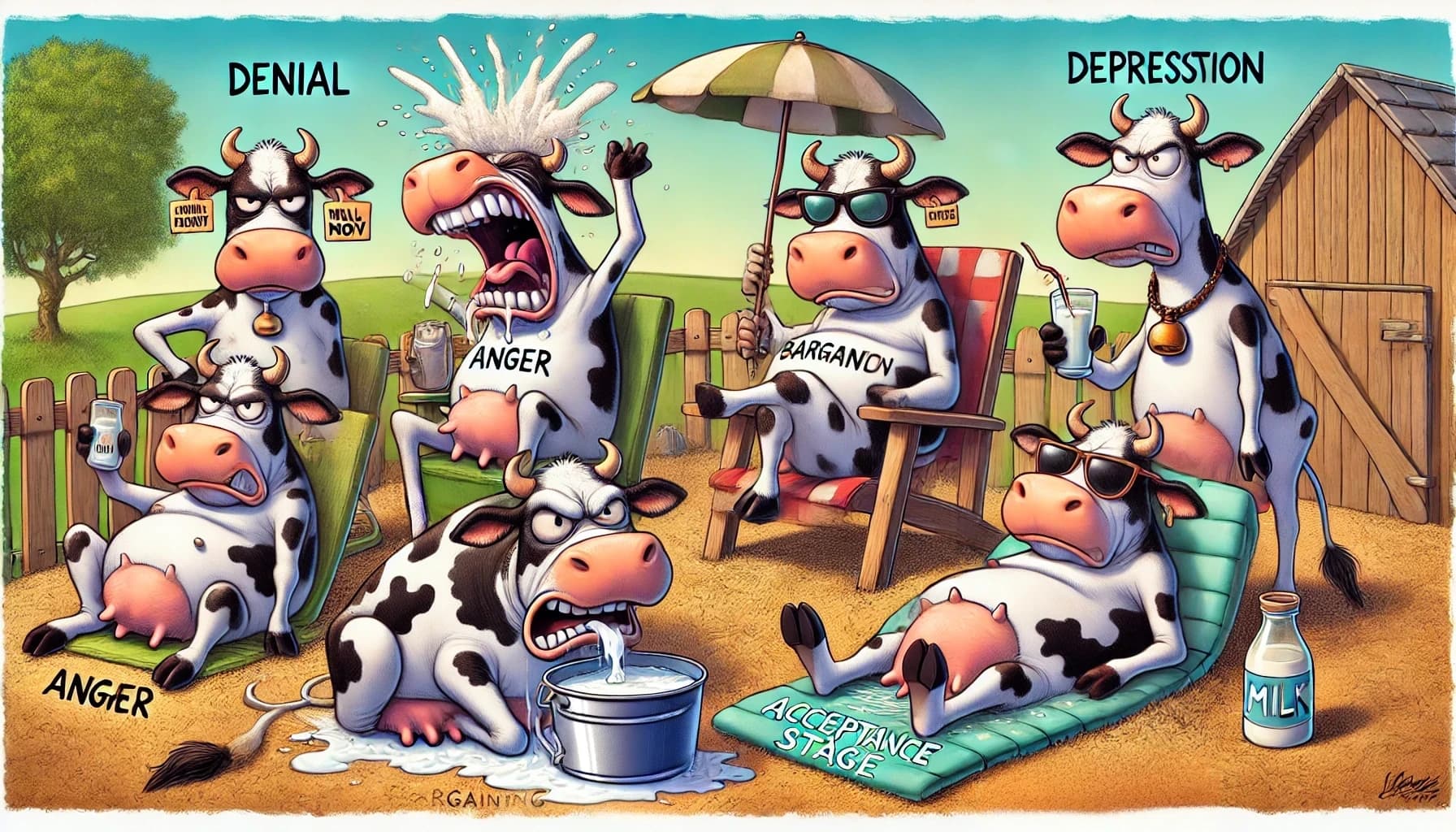
The Five Phases of a Buyers Grief
Yesterday, the market continued its bullish trajectory, driven primarily by surging spot prices for liquid products. With raw milk prices averaging €0.65, SMC prices reaching €2,550, and cream prices breaking records at €10,000 to €10,250, it’s evident that processors are fiercely competing for raw materials. This has left minimal supply available for commodity production.
How Much Bears can the remaining Bulls Fight of? 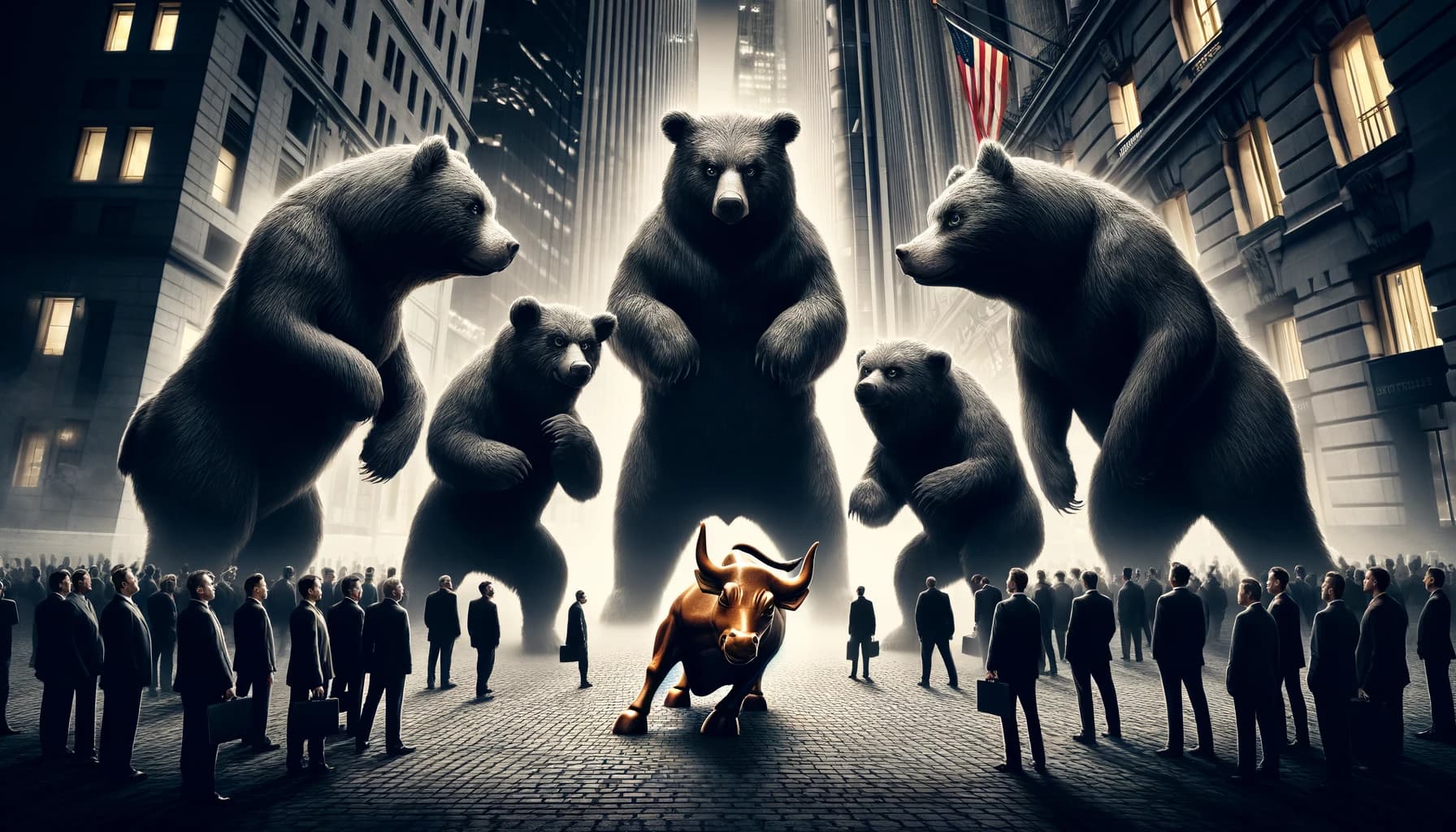
How Much Bears can the remaining Bulls Fight of?
Over the past two days, the market has been creaking and groaning under the pressure of the milk flush. It's a common annual occurrence; the market experiences this every year, and the next six weeks will likely follow the same pattern. The EU milk peaks present a recurring challenge in allocating the surplus of milk, cream, concentrate, and extra raw milk produced by EU farmers.
The weekly report
Get it before it is anywhere else
Every market report, straight to your inbox the moment it is written. Butter, cheese, powder, liquids — pick what you actually trade.
Roughly weekly · Free · Unsubscribe any time