The Five Phases of a Buyers Grief
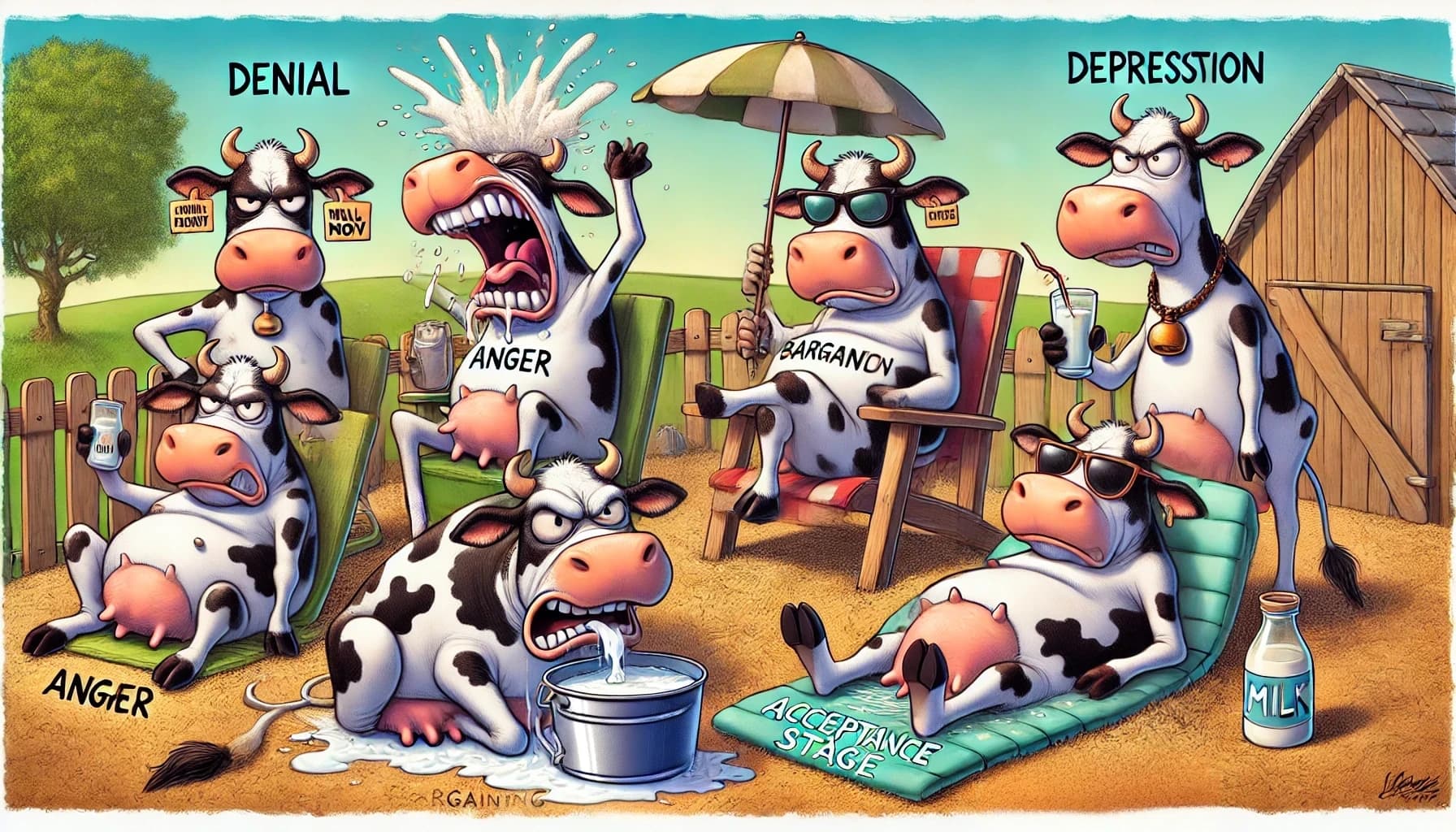
Yesterday, the market continued its bullish trajectory, driven primarily by surging spot prices for liquid products. With raw milk prices averaging €0.65, SMC prices reaching €2,550, and cream prices breaking records at €10,000 to €10,250, it’s evident that processors are fiercely competing for raw materials. This has left minimal supply available for commodity production. Current offers for butter exceed €8,000, SMP prices are above €2,400, and Gouda is now being offered between €4,900 and €5,000 for Q4. These escalating prices are generating significant emotional responses among buyers. As seen in previous market transitions (from bearish to bullish and vice versa), buyers are experiencing the five emotional stages of grief.
We all know that trading is deeply intertwined with emotions. A successful sale gives a sales manager a dopamine boost, instilling greater confidence for future trades. Similarly, a trader who seizes the right opportunity at the right moment, or a purchasing manager who secures a good parcel for their company, experiences this same euphoria. However, the emotional toll of trading can be severe, especially when poor decisions are made. While some mistakes can be quickly rectified, others have far-reaching consequences that take more than a quick fix to heal. Conversations with our purchasing partners reveal they are currently navigating the early stages of grief.
Denial: "This market is overheating!"
The first stage, denial, has been prevalent since May. As prices began to rise before Eucolait, many buyers believed these higher prices were unsustainable. While there was a slight correction post-Eucolait, prices have not significantly declined. Typically, we receive direct feedback when we release our reports so we can monitor the sentiment in the market more closely. But this summer, that feedback was notably absent due to our break. However, since our return last Monday, it’s clear that denial has remained widespread among our partners. Terms of "overheating", "sentiment-driven" and "it's only a traders game" confirmed that not much has changed in our six weeks' absence.
Anger: "These prices are criminal!"
The second stage, anger, is now apparent. We hear it in the responses to our updates, during phone calls, and from other partners. Buyers are increasingly frustrated with their sales counterparts, feeling that the high prices are unreasonable, almost akin to theft. The rapid changes in offers, often valid for just a few hours, and the frequent withdrawal of offers are significant sources of irritation. Traders are being blamed for driving up the market, producers of withholding products, and brokers, including us, are accused of creating volatility. We understand the frustration and the immense pressure this market puts on those responsible. But as said, we feel this market is clearly fundamentally driven.
Bargaining: "Can we get last week's offers back?"
We are beginning to see the first signs of bargaining. Some partners are revisiting earlier offers, and similar actions are being observed across the market. Buyers emphasize the importance of partnerships during these extreme times and attempt to convince sellers to ease their burden. Although some traders are offering slightly below current market levels, the majority have little choice but to adhere to the higher offers.
Depression and Acceptance: "Accepting short-term pain."
The final stages of grief, depression, and acceptance, are also emerging. We see the strain in our partners' faces, gradually shifting to acceptance, particularly as most of them begin to confirm prices for September and October. However, for Q4 and Q1, denial still lingers. Only the traders seem to realize that the fundamental data only leaves one possible outcome for dairy commodity prices. Prices are now rising rapidly due to the strong demand for immediate delivery. If acceptance extends to Q4 and Q1, we anticipate even further price increases.
More from the desk
The Bull, The Bear & The Black Swan 
The Bull, The Bear & The Black Swan
Last week was an intense one. When conflict erupted in the Middle East, the market's first instinct was to buy. Partners moved quickly on available offers, and by Tuesday the GDT had rallied alongside a broad bullish swing across agricultural commodity markets world wide. For a moment, it felt like the market had made up its mind. The second half of the week told a different story.
The Bull, The Bear and the Fairy Dust 
The Bull, The Bear and the Fairy Dust
After another active week of trading and yet another slide in prices, we started preparing this week’s report. But beyond concluding that the market remains bearish, there are countless ways to tell the same story: more milk, more stock, slower demand, lower prices. You know the drill. So this week, we’ll skip the usual summary. Those who know us well know we have two children — Lina and Ollie.
How Much Bears can the remaining Bulls Fight of? 
How Much Bears can the remaining Bulls Fight of?
Over the past two days, the market has been creaking and groaning under the pressure of the milk flush. It's a common annual occurrence; the market experiences this every year, and the next six weeks will likely follow the same pattern. The EU milk peaks present a recurring challenge in allocating the surplus of milk, cream, concentrate, and extra raw milk produced by EU farmers.
The weekly report
Get it before it is anywhere else
Every market report, straight to your inbox the moment it is written. Butter, cheese, powder, liquids — pick what you actually trade.
Roughly weekly · Free · Unsubscribe any time