Operation Epic Bull Market: Fear Trades Fast — Fundamentals Trade Last
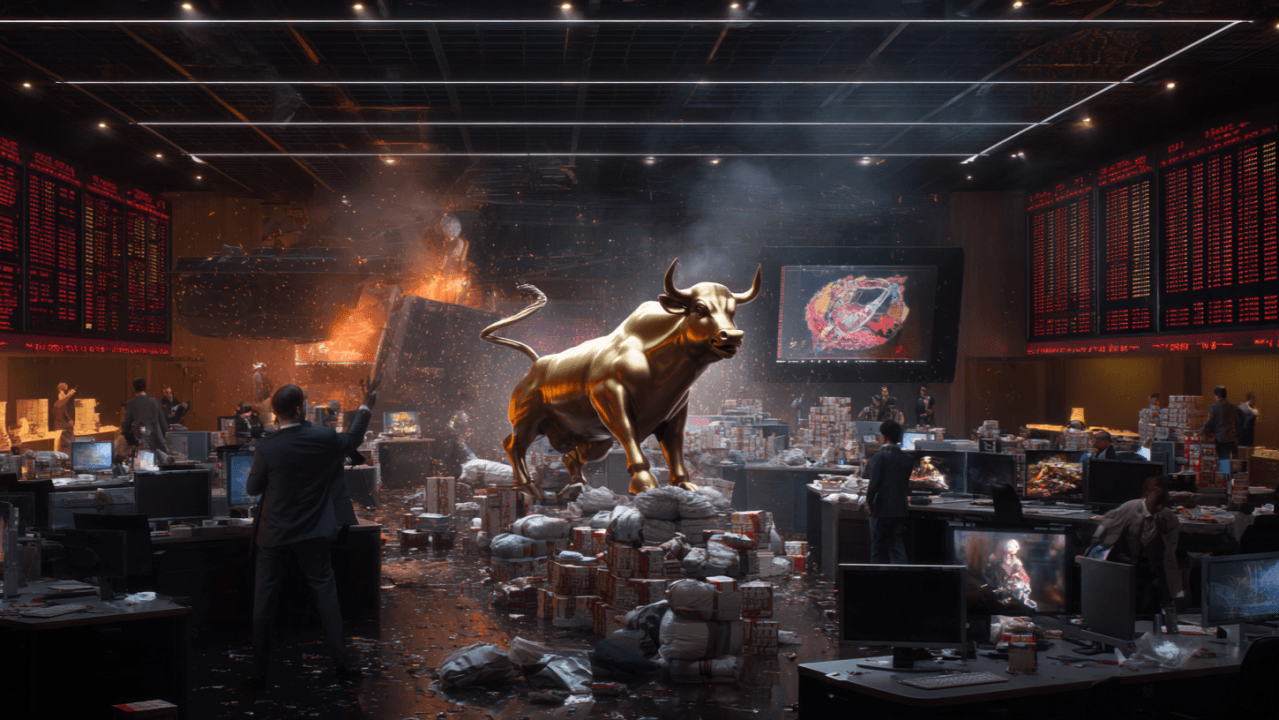
The first two days of this week have been bullish once again. What can we say other than the bulls are storming the market with Epic Fury. And where we had little understanding what was causing prices to rise in early February, the current bull market cause is easier to identify. Where Europe is oversupplied with milk, the Middle East is seeing what stocking up rockets can lead to. Operation Epic Fury from the US and Israel has resulted in a major escalation in the region. Without becoming a political commentator, and staying focused on commodity trade, let's unpack what we have here so far, and what we think can happen over the next weeks.
THE IMMEDIATE SHOCKWAVE
War changes buying behaviour fast. The first reflex in any conflict escalation is supply security — buyers don't ask whether they need it, they ask whether they can still get it. That reflex alone is enough to move markets before a single container has been redirected, before a single shipment has been cancelled, and before anyone has had time to properly assess the actual supply impact. Fear of scarcity moves faster than scarcity itself.
The immediate market effects are textbook conflict economics. Oil prices moved higher the moment the escalation became clear — energy markets are the first to price in geopolitical risk, and they do so aggressively. Gas followed. And with energy costs rising, everything that depends on energy gets more expensive: production, cold chain logistics, freight. The USD strengthened, which matters for European exporters in particular — a stronger dollar makes euro-denominated product relatively more competitive into some markets, but it also means that buyers holding USD can recalculate their purchasing power quickly, and some will use that window.
For dairy exporters — particularly those shipping into the Middle East — the logistics picture deteriorated fast. Shipping lines are reassessing routing. Ports in and around the conflict zone are seeing disrupted schedules. Containers that were moving smoothly through the region two weeks ago are now getting stuck, delayed, or rerouted at significant additional cost. Insurance premiums on cargo bound for the region have started to move — war risk clauses get activated, and that cost lands somewhere, usually on the buyer or the deal structure.
Several shipments toward the Middle East have already been cancelled outright or placed on hold pending clarity. Buyers who had open positions and were happy to receive product on a rolling schedule are now in one of two camps: either pulling forward hard to secure stock before conditions worsen, or pausing entirely and waiting to see how the situation develops. There is very little middle ground in a war week. The cautious buyer goes quiet. The anxious buyer buys everything in sight.
And it is not only Middle Eastern buyers that are reacting. Buyers in other regions who watch the Middle East as a demand signal are recalibrating. Traders who had short positions or were holding back are suddenly less comfortable with their exposure. Brokers are fielding more calls than usual. The market is louder, faster, and less rational than it was ten days ago — and that environment, regardless of what the fundamentals say, creates upward price pressure in the short term.
This is the shockwave. It is real, it is measurable, and it is happening now.
THE MID-TERM VIEW — BULL TRAP OR BULL RUN?
Here is where it gets interesting. And where we have to be honest about what we know, and what we don't. The short term is loud and clear — buyers are moving, prices are rising, sentiment is hot. The mid-term is where the real questions live, and where the answers aren't as easy to give.
Short term: the buying frenzy is real — and it feeds itself.
When uncertainty spikes, buyers rush. That rush creates real price pressure — not because supply dropped, but because demand pulled forward. More buyers chasing the same product in a shorter window pushes prices up, and rising prices pull even more buyers off the sidelines who fear missing the move. Procurement managers who were comfortable sitting on their hands last week are now getting calls from their management asking whether they are covered. The answer, in many cases, is not sufficiently, and that triggers purchasing decisions that would not have happened under normal market conditions. Looking at today's market, there are still many on the sidelines, meaning the current market push upward is not over yet.
This is sentiment trading, and it is a self-reinforcing loop — for a while. The danger is that participants start confusing the sentiment-driven price with a fundamentals-driven price. They are not the same thing. One reflects fear and forward buying. The other reflects actual supply and demand balance. Right now, fear is doing a lot of the heavy lifting.
Supply will not change because of this war.
Let's be clear: Europe is not going to produce less milk due to a drone striking down in Qatar. New Zealand is not going to produce less milk because oil tankers can't move through the Straight of Hormuz. The US is not going to produce less milk because it's leader is preparing it's next strike. The conflict in the Middle East does not affect the cows in Friesland, the Waikato, or Wisconsin. The farmers milking twice a day this week are milking the same cows, on the same schedule, into the same tanks as last week. Whatever is happening on the demand side, the supply side remains intact — and that supply was already heavy before the first missile was fired.
This is the part that gets lost in the noise of a bull run. Market participants focus on what is moving — and right now, what is moving is sentiment, logistics risk, and forward buying. But the milk keeps coming. The cream keeps getting churned. The powder keeps coming off the driers. The physical world does not pause for geopolitics, and the volumes that were building before this escalation are still building now. If anything, the logistical disruption in the Middle East means some of that product — product that was destined for the region — needs to find a new home. That is not bullish for the wider market.
Consumer confidence is a wildcard that cannot be ignored.
A prolonged escalation will eventually weigh on consumption. This is not an immediate effect — people do not stop eating butter because a conflict escalated this week. But sustained conflict, rising energy costs, and broader economic uncertainty have a well-documented effect on consumer behaviour over time. Foodservice margins get squeezed. Retail buyers become more cautious. Downstream purchasing slows. In markets where dairy is already facing competition from alternatives, a confidence shock can accelerate category switching.
The Middle East itself is a meaningful consumption market for dairy, particularly for SMP and butter. If the region moves into a prolonged period of instability, the underlying demand picture — separate from the panic buying we are seeing now — could soften. That is a medium-term bearish signal hiding inside a short-term bullish headline.
The buying frenzy creates its own hangover.
This is perhaps the most important structural point for anyone thinking beyond the next few weeks. Forward buying pulled into the current window means less buying later. The procurement manager who covered six months of butter this week because he was scared is not coming back to the market next month. The buyer who rushed to secure SMP at elevated prices to guarantee supply is now long — and comfortable — and off the market for a while.
The very spike that looks bullish today is borrowing demand from tomorrow. The pipeline fills up fast in a panic-buying environment, and once it is full, the urgency evaporates. What follows a buying frenzy is almost always a period of quiet — covered buyers, no fresh enquiry, and sellers sitting on product that was bid for aggressively this week and ignored the next week. That transition can happen faster than people expect, particularly if the geopolitical situation shows any sign of stabilising. (which it doenst)
Higher commodity prices feed the milk price — which extends supply.
There is a secondary effect worth building into any mid-term view. Rising dairy prices improve farm gate returns. Better margins reduce the financial pressure on farmers to dry off early or cut back. In a market where milk supply was already running above seasonal expectations, stronger commodity prices are likely to keep intake elevated for longer than it would otherwise be.
Higher input costs — feed, energy, fertiliser — are a real counter-pressure, and particularly so in an environment where energy prices are rising because of the same conflict driving dairy prices up. But on balance, and historically, stronger commodity prices tend to sustain milk flow. Farmers respond to returns. If returns stay high, cows keep milking. This is at least mildly bearish for anyone hoping that supply will naturally tighten to support current price levels.
The risk of a hard supply-side correction remains fully alive.
All of the above points toward the same conclusion for the medium term: the supply that was building before this escalation is still building. The logistical disruption may redirect some of it, but it does not destroy it. Product that cannot reach the Middle East this week will be offered somewhere else next week, at whatever price clears the market. Stocks in intervention warehouses, in private storage, on vessels, and in factory cold rooms do not disappear because sentiment turned bullish.
When the tensions cool — when buyers have covered their positions, when the panic subsides, when the headlines move on — that supply will reassert itself. And the correction risk grows with every week that prices stay elevated above where fundamentals would place them. The higher we go on sentiment, the harder the landing when sentiment reverses.
THE BEAR IS STILL IN THE ROOM (yes we will repeat ourself again)
We want to be clear about something, because the excitement of a bull run can make people forget fundamentals.
This market was oversupplied before Operation Epic Fury. It is still oversupplied. The war has not changed the milk balance — it has changed the sentiment. Sentiment can drive prices for days, sometimes weeks. But it cannot hold prices up indefinitely against the weight of physical supply.
When the tensions cool — and there are no signs of that yet — the buyers who rushed forward will be covered. The pipeline will be full. And the supply that kept building quietly in the background will start looking for a home. That is when the bear re-emerges, and when it does, the move down can be as fast as the move up was.
We are not calling the top. We are not advising to sell into strength or wait on the sideline. What we are saying is this: the bullish scenario is fully in play right now, sentiment is in the driver's seat, and the market has real momentum. But the structural story has not changed. The bear did not leave — it is just waiting for the bulls to tire.
Short term: bullish, and that may last longer if tensions escalate further. Medium to long term: the oversupply dynamic reasserts itself, and the correction risk grows the higher we go.
Butter: Bullish all the way!
If there was any doubt about where sentiment stood, the butter market erased it this week.
Q2 butter, which was trading around €4,600 last week andn € 4200 the week before, has moved to €4,850. H2 moved from €4,900 to €5,150. Those are not small moves for a single week — that is a market repricing in a hurry. But it is the futures curve that really tells the story: Q4 butter traded at €5,500 yesterday. Let that land for a moment. The market is pricing second-half 2025 butter at levels that would have seemed extreme just a fortnight ago. Whether those levels hold is a different question — but the fact that they traded tells you everything about where sentiment is right now.
Today's GDT confirmed the direction. Butter came in up 6%, with Solaris prices reaching €5,000 for June. And for those who follow New Zealand product as a global price signal, NZ butter traded up to almost €6,000 — a level that reframes what the ceiling might look like if the buying momentum continues.
The spot cream market is moving in the same direction, though it has not yet caught up fully with the butter rally. Cream is trading at around €4,900 DAP on average — bullish, and clearly trending higher, but not yet screaming €5,000 butter. That gap between cream values and butter values is worth watching. Either cream closes the gap upward, confirming the butter price has legs, or butter corrects back toward where cream says it should be. For now, cream sentiment has clearly turned — the hesitation that was present a few weeks ago has gone.
On the ground, the picture is consistent with what the numbers show. A significant number of our partners have told us they are lost. They don't know whether to buy, wait, confirm, or hold. That uncertainty, paradoxically, is itself a bullish signal. When buyers are unsure, they tend to act defensively — and defensive action in a rising market means covering. Over the next few days, we expect a portion of those partners to start confirming trades at current levels, simply because the discomfort of being uncovered in a rising market becomes greater than the discomfort of buying at what feels like the top. That flow of confirmations, when it comes, adds further fuel to the rally.
Sentiment was already hot before this week. Operation Epic Fury poured accelerant on it. We do not expect it to cool quickly.
That said — and regular readers will not be surprised to hear this — we are not abandoning our fundamental view. We have plenty of partners, producers, traders, and end users who are watching this rally with deep scepticism. They see the oversupply. They see the stocks. They see the cream values that have not fully followed butter higher. They are bracing for the correction. And as we laid out in the mid-term section above, we share their structural concern.
But we keep telling them the same thing: being right about the fundamentals and being right about the timing are two very different things. The short-term price action will continue to be bullish as long as sentiment holds and buyers keep confirming. Fighting that momentum with a bearish fundamental view is a painful trade right now. The bear case is correct — it is just early. And in commodity markets, early and wrong feel the same in the short term.
Watch the cream market. Watch whether confirmations start flowing in volume over the next 48 hours. And watch whether Q4 futures at €5,500 attract sellers or just keep climbing. The answers to those three questions will tell us a lot about whether this is a bull run or a bull trap.
SMP — SKIMMED MILK POWDER
If butter is rallying on fear, SMP is rallying on something closer to conviction — and that distinction matters.
Today's GDT showed strong momentum across the board, with EU-origin SMP prices trading between €2,630 and over €2,700. New Zealand SMP moved strongly as well, confirming this is not a regional story but a global repricing. The direction is clear, and the bids are real.
On the spot market, we are still seeing traders offering through us around €2,600 — but those offers are moving higher again. The floor is rising, and sellers who were comfortable at €2,550 two weeks ago are recalibrating. The gap between where trades are being concluded and where fresh offers are being placed is narrowing, and not because buyers are pulling back.
The demand signals are concrete.
But here is what makes SMP different from butter in this rally.
Butter is rising primarily on sentiment — on the memory of €7,000 prices last year, on fear of being caught short, on the kind of panic buying that a war headline accelerates. That fear is understandable, but it is emotion-driven at its core.
SMP is doing something more interesting. Yes, sentiment is playing a role — the same geopolitical shock that is moving butter is moving powder. But there is a more fundamental argument underneath the SMP rally that deserves attention. For roughly two and a half years, SMP traded below €2,500. That is a long time. Buyers got comfortable. Procurement was easy. Long-term contracts were signed at levels that felt safe, even cheap. The market settled into a low-price equilibrium and participants stopped worrying about SMP costs.
That comfort is now being challenged. When a market has been cheap for long enough, buyers underinvest in cover. They run lean on stocks because the product has always been there, always been affordable, always been replaceable on short notice. A sudden rally — particularly one driven by a combination of genuine demand disruption and improving market fundamentals — catches those buyers exposed. And exposed buyers buy, not because of fear of €7,000, but because of the more rational fear of being caught without cover in a market that is clearly moving against them.
That is a more durable form of bullishness than pure sentiment. It has legs.
We are watching whether EU prices break convincingly above €2,700 in the coming sessions. If they do, and if GDT momentum holds into the next auction, the conversation shifts from whether SMP is rallying to how far it can go before the same oversupply dynamics that haunt the butter market start to apply here too. Because they will — the milk is still being made, the powder is still coming off the driers, and the stocks that were building quietly will continue to build.
For now though, SMP feels like a market with genuine buying behind it. Not just noise — signal.
FINAL NOTE
This has been a long update — and intentionally so. Because this is not a normal week.
When a military escalation of this scale lands in the middle of an already-moving market, it deserves more than a price table and a few lines of commentary. It deserves honest analysis of what is real, what is sentiment, and what the risks are on both sides. We have tried to give you that.
The short version, for those who made it this far: the bulls are in charge right now, and the war has given them a narrative powerful enough to sustain the rally for longer than fundamentals alone would justify. Butter has repriced aggressively. SMP is following with arguably more fundamental support. Sentiment is hot, buyers are nervous, and the market has momentum.
But the milk is still flowing. The stocks are still there. And the oversupply that defined this market before Operation Epic Fury has not been resolved — it has been temporarily overshadowed.
We are not telling you to sell into strength. We are not telling you to chase the rally. What we are telling you is to stay informed, stay close to your positions, and resist the temptation to let the noise of the moment replace the discipline of a clear strategy. In markets like this one, the most dangerous thing is not being wrong — it is being surprised.
We will be watching closely and will update you as the situation develops. As always, our lines are open.
Stay sharp. Trade well.
More from the desk
Our Long View Before Our Long Break 
Our Long View Before Our Long Break
Last week the market found a bit of stability. After lower trades on cheese, the cheese market traded slowly up, although a real rally remains absent. Butter prices did dip a bit further, although at the start of this week we see some strength on the back end of the curve. And on powder, our bullish feeling just doesn't go away — and now we can find some confirmation in the market as well.
Dairy Carry Has a Shelf Life 
Dairy Carry Has a Shelf Life
Last week was bearish across the board — every product we broker leaned the wrong way. Powders lost more momentum, cheese slipped well below €3,000 for some products, and butter continues to impress with just how much keeps showing up. Supply, supply, supply.
Summer Shopping or Summer Sale? 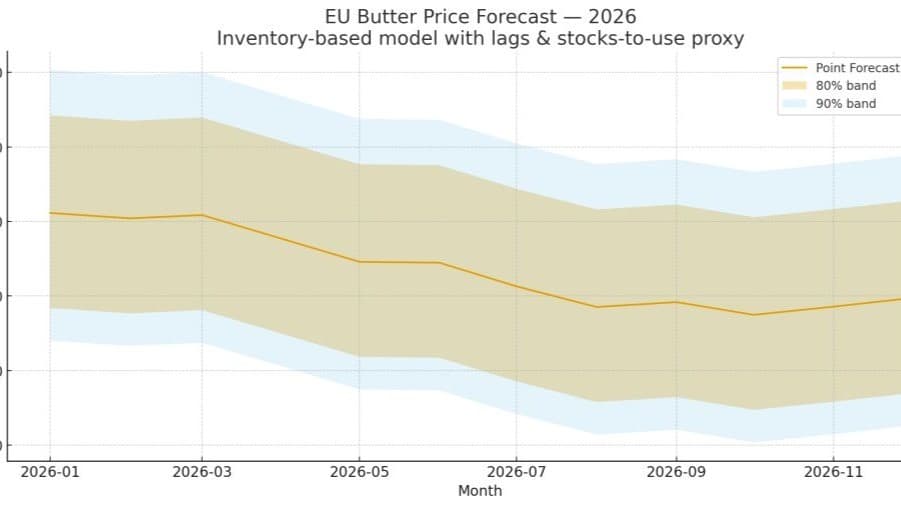
Summer Shopping or Summer Sale?
Last week was again a bit of a bearish week for the entire dairy industry. With cream prices under pressure and milk intake still strong, we keep seeing a market that has more supply than demand. Butter prices took another step lower, cheese prices cracked, and the powder market gave back a bit of its gains again.
The weekly report
Get it before it is anywhere else
Every market report, straight to your inbox the moment it is written. Butter, cheese, powder, liquids — pick what you actually trade.
Roughly weekly · Free · Unsubscribe any time