Anxious Herds & News-Fed Volatility

Last week dairy markets were volatile again. Butter continued its sharp decline in the first days of the week but found some support on Friday. Powder prices swung up and down without clear direction, and cheese prices found a path downward. High volatility doesn't come from quickly changing fundamental data, shifting food trends, or major supply chain disruptions alone. Dairy — and many other commodity markets — is increasingly affected by news headlines, presidential tweets, and algorithmic trading bots. Old-fashioned traders are getting frustrated, and risk management departments are in crisis meetings several times a day. In this week's update we look at how herd anxiety is driving dairy market volatility.
This isn't a dairy-specific phenomenon. Across commodity markets — from cocoa to natural gas to palm oil — the same pattern has emerged repeatedly in recent months. Sharp price moves triggered by sentiment, headlines, or momentum signals, followed by partial reversals once actual supply and demand data reasserts itself.
The common thread is algorithmic trading. Systems designed to react in milliseconds to news flow, price momentum, and cross-market correlations don't distinguish between a structural shift and a passing headline. They execute first. The fundamentals catch up later, sometimes. What makes this particularly disruptive is the scale at which these systems operate. A single geopolitical headline can simultaneously trigger buy or sell signals across energy, grains, and dairy fat markets before any human analyst has finished reading the article. The result is a kind of volatility that feels disconnected from reality, because in many ways it is. Prices are not always reflecting what is happening in supply chains. They are reflecting what traders (or worse, their trading bots) fear might happen next.
What amplifies this further is that the group of market participants using identical or near-identical signals is growing rapidly. When one algorithm triggers a buy order based on a headline, dozens of others are reading the same feed and executing the same logic at the same moment. There is no diversity of interpretation, no contrarian delay. The momentum builds not because the market has collectively assessed the news and agreed on its implications, but because everyone subscribed to the same data stream pressed the same button at the same time. The move that should reflect one participant's reaction ends up reflecting hundreds, and the price impact becomes multiples of what the underlying news ever justified.
The Middle East is a Dairy Market Variable Now
Nowhere has this dynamic been more visible in recent weeks than in the reaction to escalating tensions in the Middle East.
Oil prices have swung sharply on every development, real or rumored. Shipping risk premiums around all the local shipping routes have kept freight rates elevated and unpredictable. Grain markets have followed oil's lead, partly because energy costs are embedded deeply in fertilizer, harvesting, and transport, and partly because the same algorithmic triggers that fire on oil headlines fire on agricultural commodities in the same breath. When a drone strike is reported near a key shipping corridor, it doesn't take long for the ripple to reach Chicago wheat futures.
Then there are the tweets. Presidential statements from Washington have become a pricing input in their own right. A single post about tariffs, sanctions, or military posture can move markets within seconds, and the algorithm-driven ecosystem described above ensures that the reaction is immediate, amplified, and often disproportionate to whatever policy actually follows. Markets have learned to price the statement, not the outcome. That is a significant shift from how commodity pricing used to work.
Dairy supply chains are more connected to all of this than they might appear. Energy costs run through everything, from farm operations to cold chain logistics to processing plant overheads. Feed grain prices directly affect milk production economics across major exporting regions. And when the broader commodity complex moves into a risk-off mode driven by geopolitical fear, butter and powder don't sit quietly on the sidelines. They get pulled along, whether the underlying dairy fundamentals justify it or not.
The Fundamentals That Actually Matter Right Now
For all the noise, the actual short term drivers of dairy supply are telling a fairly straightforward story. Weather across the main European production regions has been close to ideal. Grass growth is strong, cows are comfortable, and milk output is reflecting that. Herd sizes are larger than they were a year ago. The flush is doing what the flush does, and it is doing it well. These are not the conditions that justify sharp price rallies, regardless of what is happening in oil markets or presidential Twitter feeds.
Short term demand is not providing much of a counterbalance either. Coverage in the EU appears relatively comfortable across most product categories. Export markets, which could in theory absorb European surplus, are looking less attractive than they were. Freight costs remain elevated, partly as a result of the geopolitical pressures described above, and several key import regions are showing reduced buying power as currency weakness and domestic economic pressure weigh on their appetite for European dairy. The higher oil prices are hitting some Asian key export partners hard, and consumers have less money to spend on what in Asia is still a luxury dairy product.
The connection between Middle East tensions and European milk output is real, but it operates on a much longer timeline than markets are currently pricing. Higher energy costs, elevated fertilizer prices, and increased farm overhead don't show up in the milk tanker next week. They show up in farmer margin calculations over the coming months, in herd investment decisions made after the flush, and potentially in production figures that look different by late 2026 or into 2027. If input costs stay elevated long enough, the supply response will come. But that is a story for later in the year, not for today's price.
The market is pricing fear of a future that may arrive, while largely ignoring a present that is well supplied.
Butter: Heavy Cream, Heavy Market
Butter is where the disconnect between noise and fundamentals is most visible right now. The physical market is telling a clear story. Cream values in Europe have come under significant pressure, with some reports indicating levels as low as €3,500 per tonne. At those input costs, butter prices above €4,000 are difficult to justify on a pure production economics basis. The math is straightforward, even if the market hasn't fully accepted it yet.
There are voices calling for a recovery. The argument is that cream levels will tighten again after Easter, and that the current softness is seasonal and temporary. That may well prove correct eventually, but we think the start of the fresh season has at least another three to four weeks to run. Until that pressure eases, cream is likely to stay heavy, and butter prices will struggle to find sustainable support at current levels. But once fresh demand kicks in, we expect stock pressure to balance out that pull on the market.
Across the Atlantic, US butter is caught in its own version of the same tension. Volatility is high, but we read the underlying trend as still pointing downward. Reports of low stock levels have triggered fear-driven buying and sharp short-term price reactions, while the more important signal, which is ample cream availability and strong fresh production, is receiving less attention than it deserves. The market is pricing anxiety more than it is pricing output. That gap tends to close, and when it does the direction is usually down.
Next week's GDT auction will be an important test, but with an extra week without a GDT the market will have to wait another week. With Solarecs butter prices clearing above €4,600 at the last event, a correction of around ten per cent on EU butter at the next tender would not surprise us. If prices trade softer again the coming week, expect the tender result to reflect that weakness once again.
Cheese: The Balance Is Tipping
Cheese felt heavier last week, and there are good reasons for it. European cheese prices have been supported over recent months by a genuine fundamental: the EU exported a meaningful share of its surpluses, reducing domestic availability and keeping the market relatively tight. That story is now becoming more complicated.
Shipping is getting harder and more expensive. Export demand at current price levels is thinning. And on the supply side, production is increasing as Ireland returns to full seasonal output and adds meaningful volume back into the European pool. The conditions that justified elevated cheese prices are quietly eroding.
Cheese markets are not yet liquid enough to attract significant futures trading activity, and in normal circumstances that keeps price moves relatively contained. But that same thin liquidity cuts both ways. If selling pressure builds, it doesn't take many trades to move the market meaningfully. A relatively small number of offers hitting a market without deep buying interest can drag prices down faster than the fundamental shift alone would suggest. Gouda, Edam, and Mozzarella are already being offered around €3,550, and the number of sellers coming to market is growing.
Next week's GDT will be worth watching closely. We expect cheese prices on the tender to drop from the €3,650 to €3,700 range seen recently, back toward €3,450 to €3,500. If that materialises, it could trigger broader selling interest in the spot market the weeks after.
And if herd anxiety reaches the cheese trading desks, the very volatility this article describes could accelerate a move that fundamentals alone would have taken weeks to deliver.
Powder: Where Every Signal Points a Different Direction
If you think butter and cheese are complicated, powder is where the picture becomes genuinely difficult to read. And unlike the volatility described elsewhere in this update, this one isn't purely driven by algorithms or geopolitical noise. The fundamental picture itself is contradictory, and that contradiction is exhausting the market participants caught in the middle of it.
From a European supply perspective, the data is overwhelmingly bearish. Milk volumes are high, drying capacity is running hard, and stocks are building. On paper, that should point clearly toward lower prices. In a normal market environment, it probably would.
But the world is missing a significant exporter. Iran, in recent years, has become a meaningful supplier of skimmed milk powder to global markets, and it is now largely absent. That gap in export availability is providing a floor that European supply data alone cannot explain, and it is creating a split screen that is deeply frustrating for anyone trying to run a coherent trading strategy.
Layered on top of this is a consumption shift that deserves more attention than it typically receives. There is a clear and accelerating trend away from dairy fat and toward dairy proteins. Whey powder prices are reaching levels that would have seemed implausible not long ago. In the US, NFDM prices are climbing at a pace that is difficult to justify through any conventional analytical framework. The protein story is real, structural, and still gathering momentum.
The result is that our European partners are caught between two entirely different market realities. Their own domestic data tells them to be bearish. The signals coming from export markets and from CME tell a different story, one of strong demand and limited competition. On some days the EU market trades down on its local fundamentals, only to bounce back on bullish CME sentiment hours later. The JoJo effect, as more than one partner has described it to us this week, is getting old. We understand the frustration. In a market this noisy, even the fundamentals are arguing with each other.
Anxious Herds & The Trader's Dilemma
Stepping back from the individual markets, the picture this week tells a consistent story. Butter is heavy under cream pressure. Cheese is losing the fundamental support that carried it through the winter. Powder is caught between a bearish European reality and a bullish global narrative that refuses to go away. And running through all of it is the volatility that started this update — sharp, fast, and frequently disconnected from the data underneath it.
It is easy, from an analytical perspective, to say that anxiety-driven volatility should simply be dismissed. That markets will always trade back to where fundamentals say they belong. That patience is the strategy. And in the long run, that is probably true.
But that view is a luxury that traders cannot always afford. When prices move thirty, fifty, or a hundred euros away from where your forecast said they should be, your book doesn't care about the theory. Risk managers don't wait for markets to find their way back. Coverage decisions get made under pressure, at the wrong moment, for the wrong reasons. We have seen buyers come to market not out of conviction but purely out of need, covering positions because the move forced their hand. We have seen exactly the same on the selling side. Neither group wanted to trade at those levels. The market gave them no choice.
Dairy futures are not yet algorithmically dominated in the way that energy or equity markets are. But that doesn't mean the herd mentality isn't present. A growing number of market participants are watching the same indicators, subscribing to the same news feeds, and acting on the same buy and sell signals. The result is buying and selling rallies that always feel (slightly) out of proportion, because they are. Not driven by machines, but driven by people who have quietly started behaving like them.
In that environment, the edge doesn't belong to whoever reacts fastest. It belongs to whoever keeps their head when the herd has lost theirs.
More from the desk
Our Long View Before Our Long Break 
Our Long View Before Our Long Break
Last week the market found a bit of stability. After lower trades on cheese, the cheese market traded slowly up, although a real rally remains absent. Butter prices did dip a bit further, although at the start of this week we see some strength on the back end of the curve. And on powder, our bullish feeling just doesn't go away — and now we can find some confirmation in the market as well.
Dairy Carry Has a Shelf Life 
Dairy Carry Has a Shelf Life
Last week was bearish across the board — every product we broker leaned the wrong way. Powders lost more momentum, cheese slipped well below €3,000 for some products, and butter continues to impress with just how much keeps showing up. Supply, supply, supply.
Summer Shopping or Summer Sale? 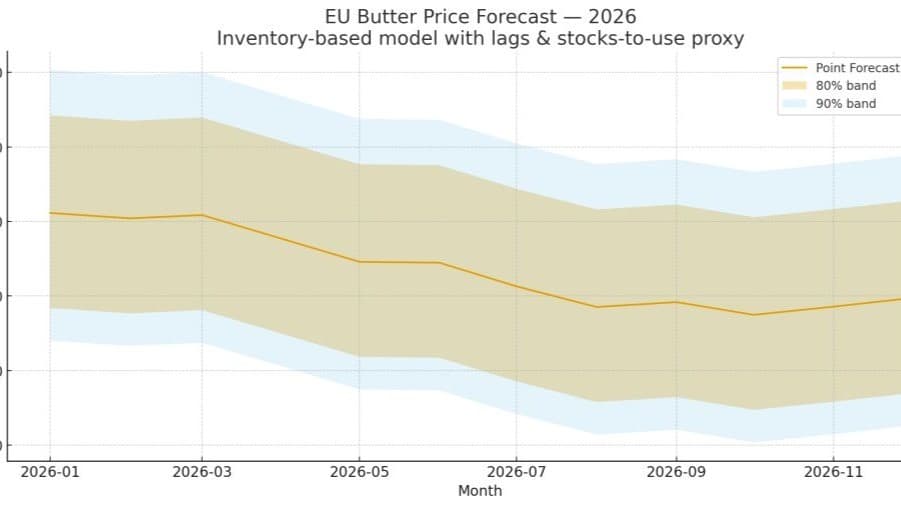
Summer Shopping or Summer Sale?
Last week was again a bit of a bearish week for the entire dairy industry. With cream prices under pressure and milk intake still strong, we keep seeing a market that has more supply than demand. Butter prices took another step lower, cheese prices cracked, and the powder market gave back a bit of its gains again.
The weekly report
Get it before it is anywhere else
Every market report, straight to your inbox the moment it is written. Butter, cheese, powder, liquids — pick what you actually trade.
Roughly weekly · Free · Unsubscribe any time