Start of the Spring: Sideways Signals

Last week, the market traded sideways with some midweek volatility. Prices for commodities trended down in the first half of the week, but most ended at the same price as the week began. This provided confirmation for partners on both sides of the market outlook spectrum. Those with a bearish view saw their strategy confirmed as prices dipped early in the week under pressure from increased milk production and a bearish GDT. But in the second half of the week, those with a bullish view witnessed prices rebounding, buoyed by expectations of stable EU milk supply and low commodity stocks.
Supply: Positive Signals
We try to avoid repetition in our updates, but the analysis keeps coming back to the same question. This central question persists: which is stronger, supply or demand? As the season progresses, answering the supply question becomes increasingly clear. Observing the data, most countries appear to be in line or slightly ahead compared to last year. It seems highly likely that this year's supply will surpass last year's. However, Ireland remains a significant question mark. With a slow start January, February and March look weak in supply v.s. last year. The milk volumes produced in April will shed light on the trajectory of their season. Nonetheless, it appears the EU will see more milk than the previous year.
The biggest effect of more milk can be felt while looking at the spot market for liquids. Last week at its weakest point we heard raw milk prices between 35 and 38ct. Cream prices traded as low at € 6200 and SMC prices as low as € 1200. It does seem that once those prices hit the market, a lot more buyers got activated. But it does show us the market is searching for extra outlets during the peak.
It does seem that we tend to forget that with last year's milk collections in the EU, we still saw SMP and butter stocks shrinking. And although SMP exports seem lower v.s. last year, the butter imports for NZ we saw last year are unlikely to be the same this year What we try to say is that last years milk supply didn't create a massive price surge, but we did have use our stocks to avoid that.
Demand: Nothing Exiting
Assessing demand is always challenging and relies a lot on aged data or subjective hear say stories. Looking at the demand picture outside of the EU, these destinations show reduced interest compared to previous years, notably China. Additionally, the EU faces heightened competition in cheese and powders from the US and NZ, although it seems less so in butter.
Turning to the butter market, shortages seem to persist. EU end-users last week were looking for immediate and near-future butter deliveries, indicating either robust spot demand or a buyer strategy that relied on hopes of last-minute supply. Scant availability for short-term delivery suggests low stock, among end users, traders and suppliers. April buyers are unlikely to have their butter needs covered, potentially leading to increased demand in the coming weeks. Combined with anticipated cream demand upticks as soon as we will see improving weather, this could bolster prices.
Cheese partners experience a stable market with consistent demand and supply. The effects of the Irish A-Ware plant may influence the market in the coming weeks, although the effect of the plant was already expected to be felt. If Irish volume additions don't disrupt the market significantly, cheese prices could remain steady in the coming months. EU partners indicate limited capacity to produce more Gouda/Edam, with only Mozzarella production potentially affected by increased milk supply, potentially leading to diverging price trends. With steady Gouda demand since September, we expect the cheese market to trade sideways.
The powder market faces its weakest demand, and it is already lasting months, primarily due to reduced Chinese demand and slower global purchasing trends. Internal EU powder demand has remained low for an extended period, with little indication of an imminent increase. We did see some increased demand at the end of last week, mainly coming from traders aiming to lock in some cheap product.
Stocks: Critically Low
Despite adequate supply and stable demand, it's tempting to adopt a bearish outlook, possibly even a bit more heavy in the short term. However, comparing to previous years, stock levels have declined significantly, particularly for SMP and butter. Stable supply and demand compared to last year may still lead to decreased overall stocks by year-end. To maintain the same levels as last year's stock levels, stronger supply and stable (or even slightly weaker) demand are necessary.
According to this logic, prices should remain stable as long as supply slightly exceeds demand. However, if demand surges without a corresponding increase in supply, low stocks may rapidly propel the market into bullish territory.
In conclusion, last week's assessment remains unchanged. Milk supply is ample, nearing its peak, potentially increasing pressure on the spot market. Yet, producers don't anticipate significant milk or commodity dumping. While selling milk at 35ct might seem low, it's likely done to avoid costly stockpiling. If the peak milk pressure eases without sufficient stock replenishment, the EU might shift from exporting to importing products.
More from the desk
Our Long View Before Our Long Break 
Our Long View Before Our Long Break
Last week the market found a bit of stability. After lower trades on cheese, the cheese market traded slowly up, although a real rally remains absent. Butter prices did dip a bit further, although at the start of this week we see some strength on the back end of the curve. And on powder, our bullish feeling just doesn't go away — and now we can find some confirmation in the market as well.
Dairy Carry Has a Shelf Life 
Dairy Carry Has a Shelf Life
Last week was bearish across the board — every product we broker leaned the wrong way. Powders lost more momentum, cheese slipped well below €3,000 for some products, and butter continues to impress with just how much keeps showing up. Supply, supply, supply.
Summer Shopping or Summer Sale? 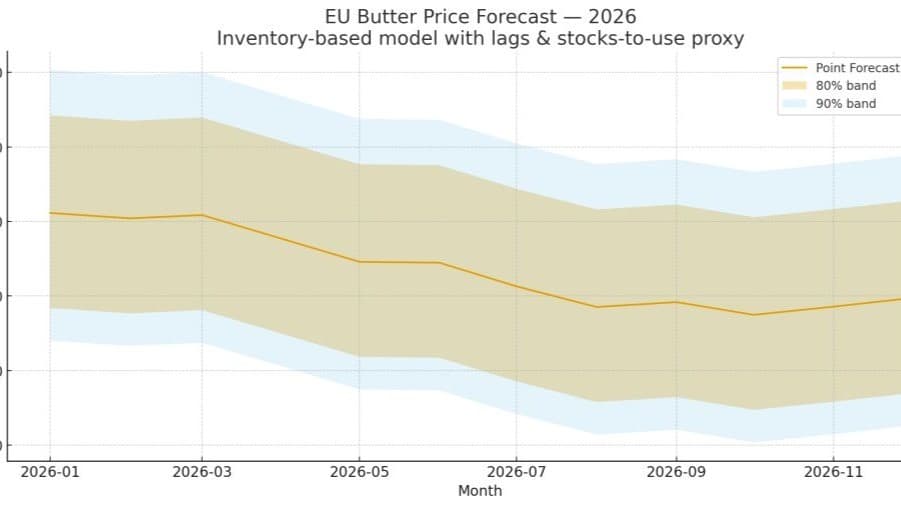
Summer Shopping or Summer Sale?
Last week was again a bit of a bearish week for the entire dairy industry. With cream prices under pressure and milk intake still strong, we keep seeing a market that has more supply than demand. Butter prices took another step lower, cheese prices cracked, and the powder market gave back a bit of its gains again.
The weekly report
Get it before it is anywhere else
Every market report, straight to your inbox the moment it is written. Butter, cheese, powder, liquids — pick what you actually trade.
Roughly weekly · Free · Unsubscribe any time