Peak, Plateau or Pivot Point

Last week, the market remained mostly sideways for most of the commodities we broker, with a slightly weaker undertone compared to the previous week. We haven't observed many trades at lower levels, but there’s a notable reduction in bids at higher levels, while offers remain consistent with last week's pricing. Fundamentally, we maintain a bullish stance on all commodities, but short-term sentiment is shifting, leading to the crucial question: Are we at the peak, merely plateauing, or at a pivotal moment for the dairy market?
As dairy brokers, predicting the market isn’t our role, but we strive to provide our partners with the best possible guidance. With indicators still pointing bullish, we've advised acting accordingly. However, caution is creeping in, and we're advising restraint more frequently. While several indicators remain bullish, others are turning slightly bearish, prompting us to ask ourselves: What would we do?
Peak or Plateau?
Butter Market
The most common question is whether we're at the peak, especially from butter buyers. Butter has recently hit all-time highs but has struggled to push higher in recent weeks. Q4 prices are lingering around €8,000, while 2025 prices are inching up. Although some transactions have been reported at €8,200 to €8,500, the market seems to have stabilized, as seen in both our own trading and the EEX futures.
Cheese Market
In contrast, we believe the peak for cheese is still some way off. Current prices on the EEX and in our markets reflect the highest prices, but end users are hesitant. Stocks are low, milk supply is tightening, and producers aren’t pressured to sell, suggesting a strong possibility of a second leg up for cheese prices once buyers step in.
Back to butter: production remains low, with cream prices consistently trading above €10,000 (despite a recent dip below €10,000). Stocks on the continent are minimal, and traders seem unable to offer any close-by availability. Any uptick in demand could push butter prices higher, with no clear ceiling in sight. Unlike cheese, though, we’re less confident about this scenario for butter, as demand is uncertain.
For butter to climb further, additional demand is crucial. If substantial Q4 demand remains uncovered, prices will rise. However, if demand is mostly covered, low market activity could gradually pressure prices down. Q4 might not see a collapse, but prices for 2025 could soften. Any insights on uncovered demand would be valuable.
Summary:
- Butter Peak or Plateau: Close to the peak, but even a small uptick in Q4 demand could push prices higher in the next 2-3 weeks.
- Cheese Peak: Not yet in sight. Uncovered demand and relaxed producers suggest upward movement in the coming weeks.
Too Early to Pivot
Some partners are not just predicting a peak—they’re calling for a market reversal. They point to potential disruptions from NZ and US imports, diminished exports, inflation-led demand destruction, and higher milk prices.
Imports and Market Balance
Historical data shows that growing price gaps between EU and non-EU countries often lead to increased imports a few months later. Some NZ butter and even US butter is reportedly en route to the EU. However, such imports are unlikely to exceed 10-15k mt, insufficient to fully balance the EU butter market but enough to bring some relief in Q1. That said, those needing Irish, Dutch, or German butter won't find solace in US butter.
No signs suggest NZ cheese entering the EU, and US cheese prices remain high, keeping competition at bay. A more significant impact could come from a loss of export markets, which would impact the EU's supply/demand balance.
Demand Destruction and Milk Intake
The most compelling argument for lower prices is demand destruction due to inflation. While higher prices might reduce demand, the question is: when will this impact be felt? Retail prices for butter will rise in the coming months, but prices for products using dairy as an ingredient may not increase as quickly. Historically, dairy consumption has been resilient even during price hikes.
Regarding milk intake, higher milk prices usually encourage more production, but this incentive may not take effect until next year. If prices start declining in Q4, the likelihood of farmers reaching an incentive price reduces. It would take 4-6 months of high prices for milk production to respond meaningfully.
The bearish argument that "once sentiment shifts, there’s no stopping the bears" is valid, but only fundamental changes—not sentiment alone—can bring this market down.
What about Powders?
The powder market has traded between €2,400 and €2,600 for months, showing a solid foundation rather than a plateau. Despite having several opportunities to rally, it hasn’t done so. It’s risky to predict higher prices, but we don’t expect them to fall below €2,400. For powders like BMP, SMP, and whey, we see potential for an upward move, although a favorable euro/dollar exchange rate would help exports.
Returning to our original question: Are we at the peak, on a plateau, or at a pivot point? The reality might be all three, but if we were to wager, cheese prices seem poised to trade higher in the coming weeks. For butter, our confidence is lower despite the bullish data. And in the powder market, the floor is solid, presenting minimal downside risk. We welcome your feedback and insights on our analysis.
More from the desk
Our Long View Before Our Long Break 
Our Long View Before Our Long Break
Last week the market found a bit of stability. After lower trades on cheese, the cheese market traded slowly up, although a real rally remains absent. Butter prices did dip a bit further, although at the start of this week we see some strength on the back end of the curve. And on powder, our bullish feeling just doesn't go away — and now we can find some confirmation in the market as well.
Dairy Carry Has a Shelf Life 
Dairy Carry Has a Shelf Life
Last week was bearish across the board — every product we broker leaned the wrong way. Powders lost more momentum, cheese slipped well below €3,000 for some products, and butter continues to impress with just how much keeps showing up. Supply, supply, supply.
Summer Shopping or Summer Sale? 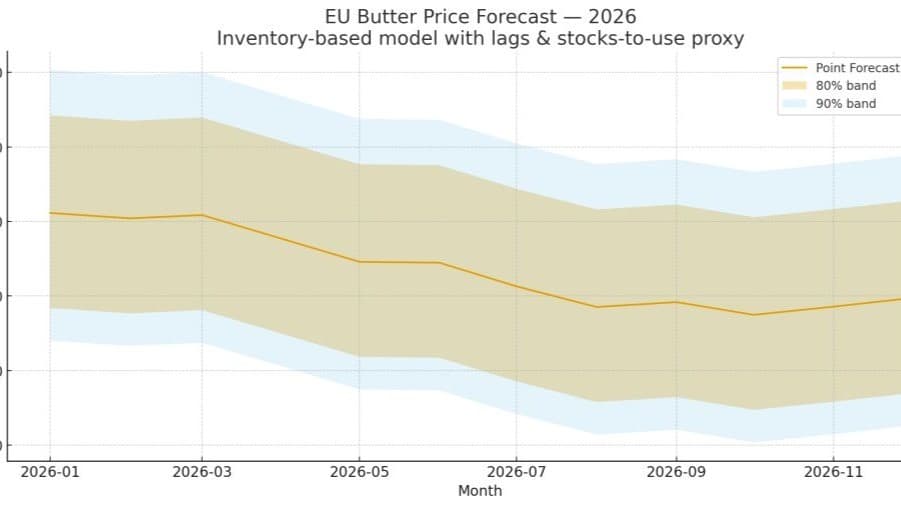
Summer Shopping or Summer Sale?
Last week was again a bit of a bearish week for the entire dairy industry. With cream prices under pressure and milk intake still strong, we keep seeing a market that has more supply than demand. Butter prices took another step lower, cheese prices cracked, and the powder market gave back a bit of its gains again.
The weekly report
Get it before it is anywhere else
Every market report, straight to your inbox the moment it is written. Butter, cheese, powder, liquids — pick what you actually trade.
Roughly weekly · Free · Unsubscribe any time