Demand Destruction & Supply Stress

Last week, the dairy market traded relatively sideways. While butter prices showed some upward movement on Monday and Tuesday, market traction slowed in the latter half of the week. Butter prices even dipped slightly as speculators took margins at lower levels, unable to find new buyers willing to accept the higher prices. Cheese prices continued to rally without finding a lower tier, but the rate of increase slowed down. Powder prices also maintained a slightly stronger position, although many market participants remain cautious about the outlook. Reflecting on August, it was one of the most active and bullish months in recent history, raising the question: what should we expect for September?
September Market Trends: Mixed Signals for Price Movements
September traditionally carries a slightly bullish reputation, especially for fats, but historical data tells a more nuanced story. Over the past decade, butter prices have risen from the first to the last week of September in 2015, 2016, 2021, and 2023, while they declined in 2018 and 2022 and remained flat in other years. With only two bearish Septembers out of the last ten, it is reasonable to expect stable to slightly higher prices in the months ahead. Supply tends to be tight, and demand remains relatively high during this time of year. The two bearish years both saw significant milk intake increases, which are very unlikely in the upcoming month.
September is traditionally also a very active month, with many market participants returning from summer breaks, ready to take on the final months of the year. Budget planning for 2025 is in full swing, bringing new demand to the market for Q1 and Q2. Historically, September and October have been the most active months in terms of trading volume for Get Fair Dairy, and we are prepared to support where needed.
Market Outlook for This Week
This week, we expect to see increased market activity as many buyers and sellers return. Based on out-of-office responses over the past few weeks, most partners are back and ready to engage with the market, though some may need time to adjust to current market dynamics.
We maintain a bullish outlook, anticipating that milk intake data will soon reflect the anecdotal reports of low milk solids and reduced volumes, amplifying the impact on collections. Warm and sunny weather across the EU is sustaining strong demand for fresh products, notably mozzarella. Although some market participants downplay the impact of bluetongue, producers are increasingly vocal about their concerns. Bluetongue is not just a market story; it’s a real issue affecting supply, which we expect will remain tight.
Tuesday’s Global Dairy Trade (GDT) auction could be a pivotal moment. Futures suggest a slight increase in most commodities, even with more product on offer compared to the previous auction. Buyers are expected to be eager to secure volume, as EU product prices continue to rise and U.S. prices on the CME have also increased since the last auction. We heard reports of some EU deals to Southeast Asia being canceled as buyers look to Oceania for lower prices. However, with Australia experiencing one of the driest autumns on record, some sellers are holding back to see how production unfolds. We therefore believe butter and SMP prices will trade significantly higher, even beyond current futures forecasts.
Demand Destruction: Will Higher Prices Impact Consumption?
Despite the bullish signals, there are concerns about how higher prices might affect demand. Buyers are pushing back more forcefully against the rising prices of butter and cheese. The current market increase, while not entirely unexpected, has still caught some by surprise. Interestingly, most buyers we speak with acknowledge the low availability of products and reduced milk intake. They hear the same supply concerns from suppliers and recognize these are not mere tactics to drive prices higher. However, they argue that the potential for demand destruction due to high prices is significant.
We previously addressed this in our "Lessons from 2022" article, noting that we didn't observe a dramatic dip in butter or cheese consumption during the price peaks of 2022. While retail butter sales slowed slightly, overall sales remained steady throughout the year. The real question is how high butter prices will impact products like croissants, cookies, or chocolate. For instance, despite cocoa prices rallying from $2,500 to almost $12,000, consumption remained mostly unaffected, even with cocoa being the largest key ingredient in chocolate bars. (between 50-85%). Cacao prices started to rise rapidly at the start of this year (above $ 4500,-) and are still trading at 4 times the normal average after 9 months!
Ofcourse, the heavest impact for higher butter prices and higher cheese prices are for the core product in the supermarket. In the Netherlands the average price per kg for standard private label brands are between € 9-€ 15,- per kg. The highest price selling for Lurpak and Friesland Grass Butter. But when clicking the historic pricing we can see that range at the beginning of the year was at € 8,30 and ... that same € 15,-. It seems retailers, even when faced with higher prices, have some room before the need to increase their sales prices.
For croissants, where butter accounts for about 25% of the ingredients, a significant increase in butter prices does not translate directly into doubling the end product's price. With butter prices projected between €5,500 and €6,000 in 2023 and forward prices around €7,000 for 2025, the expected price increase may be absorbed similarly to other recent food inflation.
For products like biscuits and chocolates, where butter comprises 15-30% of the base ingredient, the impact of rising butter prices will vary but likely remain manageable. Even cheese, where current prices are about 15% below previous highs, hasn't historically triggered major consumption changes. The key question is whether modest price increases will lead to a noticeable drop in demand for products like pizza or sandwiches, or if consumers will simply adapt as they have in past inflationary periods.
Ill managed Risk
Yes, we have also heard stories of bakeries considering paying penalties to retailers rather than continuing to supply at current high prices. However, it's important to note that we have been signaling €8,000 butter prices since May, at a time when many still had ample opportunity to secure product at €6,500. This isn't to pat ourselves on the back; we know others in the market were giving the same advice to their buyers.
It's a hard truth, but those now facing difficulties are often the result of poor risk management. The current situation is not an unexpected market shift but rather a foreseeable outcome that some chose to ignore. It's not fair to push the burden onto retailers or downstream customers when the warning signs were clear. Instead, this serves as a crucial reminder of the importance of proactive risk management in a volatile market environment. And there is nobody who can say they didn't know butter is a volatile product.
Final Thoughts
The dairy market continues to face tight supply conditions, driven by factors such as low milk intake, weather challenges, and ongoing disease concerns like bluetongue. While the potential for demand destruction is real, historical trends suggest that consumption is more resilient than many anticipate, especially for essential and culturally significant dairy products. The focus remains on supply-side dynamics, which are expected to keep prices supported in the near term. As we move forward, staying vigilant and responsive to both supply and demand signals will be crucial in navigating the months ahead.
More from the desk
Our Long View Before Our Long Break 
Our Long View Before Our Long Break
Last week the market found a bit of stability. After lower trades on cheese, the cheese market traded slowly up, although a real rally remains absent. Butter prices did dip a bit further, although at the start of this week we see some strength on the back end of the curve. And on powder, our bullish feeling just doesn't go away — and now we can find some confirmation in the market as well.
Dairy Carry Has a Shelf Life 
Dairy Carry Has a Shelf Life
Last week was bearish across the board — every product we broker leaned the wrong way. Powders lost more momentum, cheese slipped well below €3,000 for some products, and butter continues to impress with just how much keeps showing up. Supply, supply, supply.
Summer Shopping or Summer Sale? 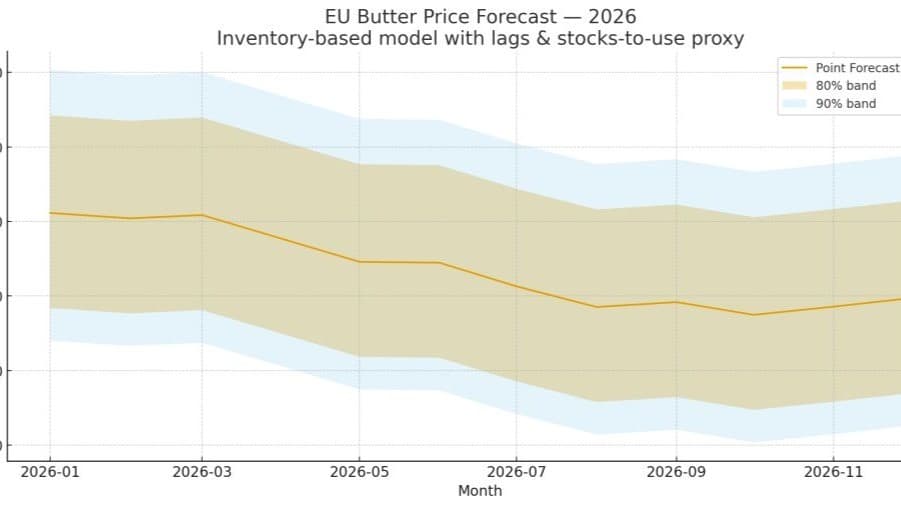
Summer Shopping or Summer Sale?
Last week was again a bit of a bearish week for the entire dairy industry. With cream prices under pressure and milk intake still strong, we keep seeing a market that has more supply than demand. Butter prices took another step lower, cheese prices cracked, and the powder market gave back a bit of its gains again.
The weekly report
Get it before it is anywhere else
Every market report, straight to your inbox the moment it is written. Butter, cheese, powder, liquids — pick what you actually trade.
Roughly weekly · Free · Unsubscribe any time